Brentwood vs. Franklin for a Custom Home
Reviewed by Patrizio Murdocca, Founder of May Construction
The short answer, from a builder working in both: choose Brentwood if you want an established estate lot, golf-community living, and an estate-scale build from day one. Choose Franklin if you want the historic downtown in your weekly life, a wider spread of lot types and budgets, or acreage toward the edge of the county. Both sit in Williamson County, both have the schools families move for, and both start a build the same way. The rest is detail, but it’s the detail that decides which one fits you.
Key takeaways
Brentwood is mostly estate-scale. Custom builds there typically run $1.5M to $4M depending on lot, community, and scope. Most of our Brentwood work lands in the $2.75M to $4M range.
Franklin covers the widest range of any area we build. Typical builds run $1.2M to $4M, from in-town infill near downtown to estate builds on county-edge acreage.
Each city permits its own builds. Neither runs through Metro Nashville’s Codes Department, and permit review can take a few days to a few months depending on the municipality.
School zoning changes by address in both cities. Confirm what serves the specific lot, not the city, before you commit.
The first move is identical either way: a site walk and a feasibility review before anything is designed.
Two different versions of Williamson County
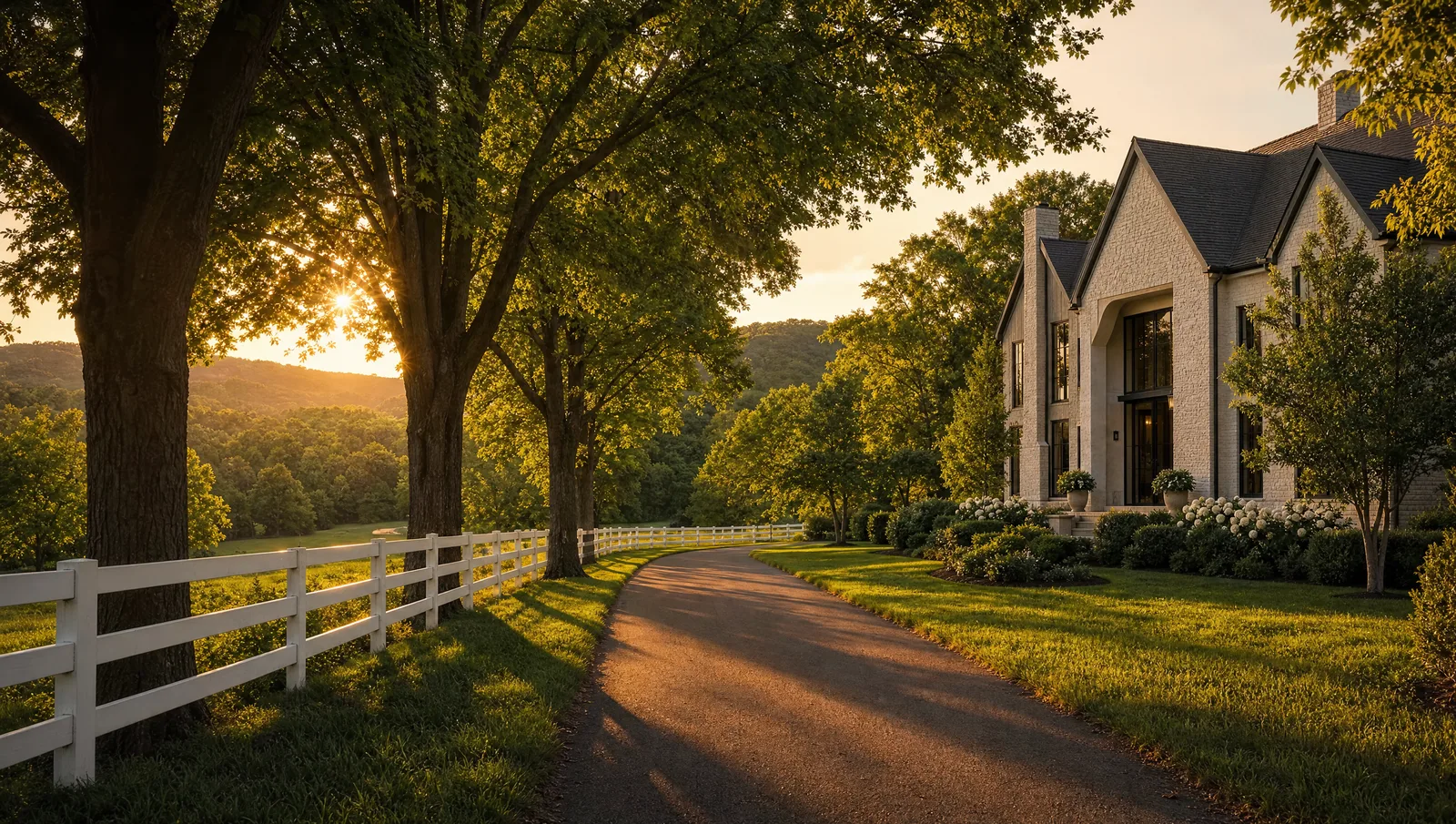
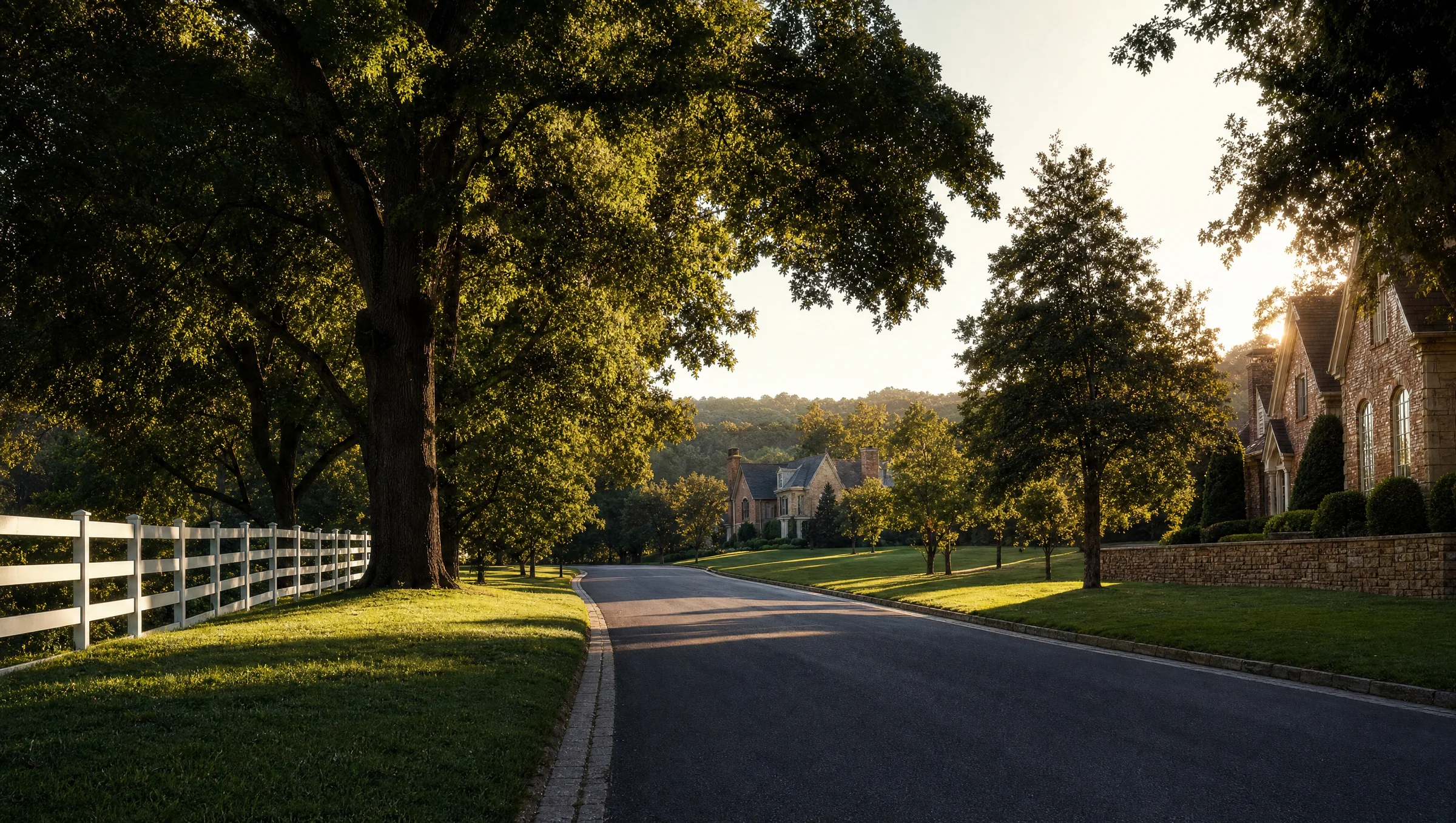
Brentwood is the county’s family-first suburb: golf communities, cul-de-sac neighborhoods, and some of the region’s most sought-after public schools, all within a short commute of Nashville. Streets like Governors Way and the corridors around Concord Road carry a mix of established estate lots and newer custom construction. The pace is quieter and the lots are bigger, but you’re still fifteen minutes from Green Hills on a normal Tuesday.
Franklin pairs a walkable, historic downtown with newer upscale subdivisions spreading south and west, Westhaven, Berry Farms, and the corridors off Highway 96 among them. It draws relocating families from California, Texas, and the Northeast who want Southern charm without giving up new construction. It draws longtime Nashvillians, too, moving out for land and schools.
Same county, two different daily lives. Brentwood is built around neighborhoods; Franklin is built around a town. That distinction runs through everything below.
The lots are the real difference
Ask us which city to pick and we’ll ask about your lot first, because the two offer very different land.
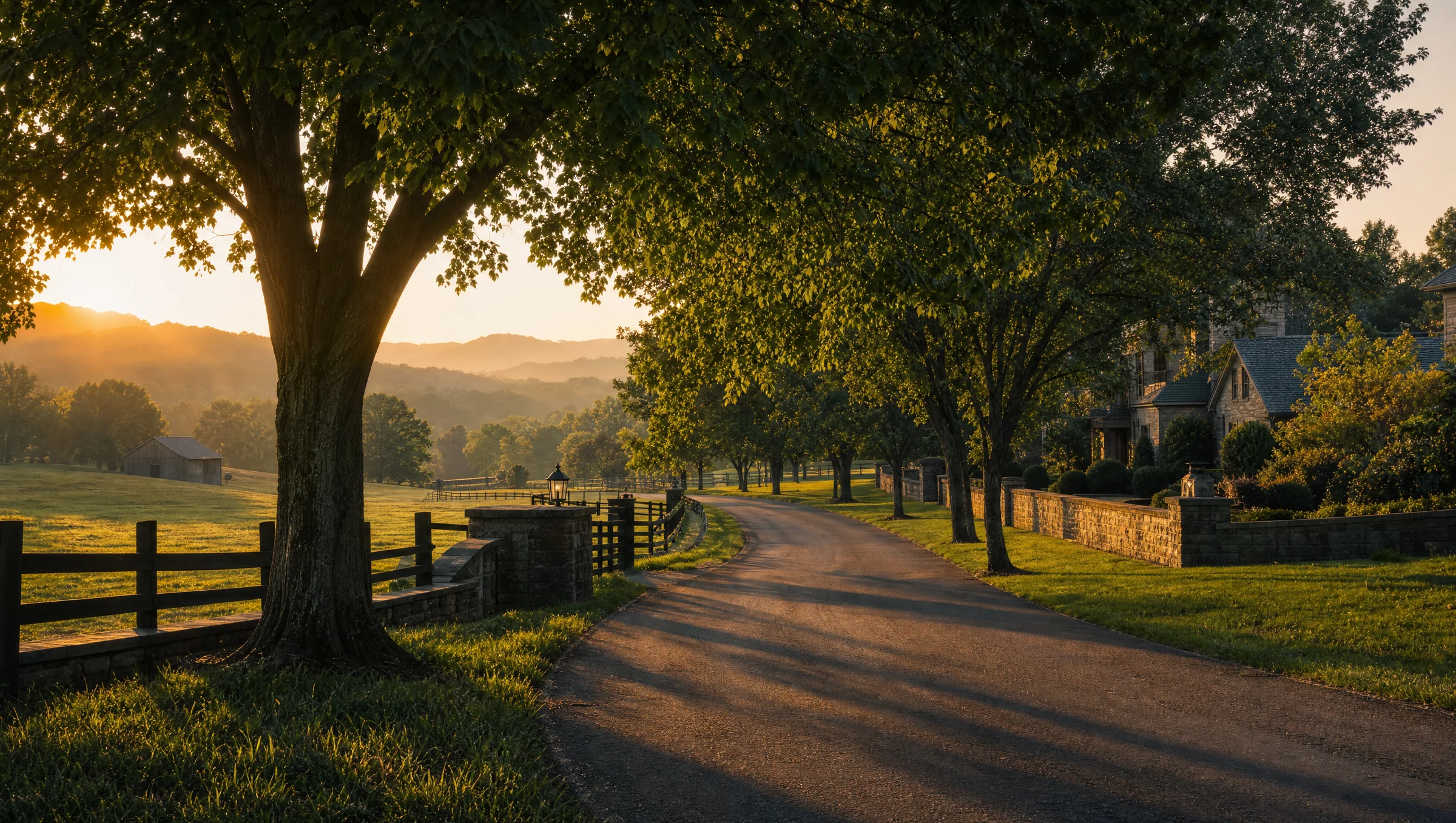
In Brentwood, the lots run large, room for real garage courts, pools, and guest suites that don’t feel cramped. Buyers often already own their lot, inside an established golf community or on acreage they’ve held for years. When they don’t, they’re shopping among established parcels rather than new phases of a subdivision.
In Franklin, lot sizes and price points vary more than almost anywhere else we build, from in-town infill near downtown to acreage toward the edge of the county. Franklin also has the widest mix of owner-held lots of any area we serve. That tells you something: people arrive holding very different kinds of land, and the city absorbs all of it.
If you haven’t found land yet, that variety matters: Franklin simply gives you more entry points. And if you’re weighing a specific lot in either city, we’ll evaluate it before you go under contract. Grade, mature trees, setbacks, easements, utility access, those decide what can actually be built, before taste enters the conversation. That evaluation is the heart of our build-on-your-lot service, and our lot feasibility guide walks through the full checklist.
What a custom build typically costs in each
We publish typical ranges on our neighborhood pages, and they’re worth setting side by side. These are market guidance for what a custom build in each area usually runs. They are not quotes, and not claims about any specific project.
Brentwood: typically $1.5M to $4M depending on lot, community, and scope. The city spans everything from established in-town lots to full estate parcels near the golf communities. Most of our work there is estate-scale: $2.75M to $4M homes with real garage courts and pool-ready backyards.
Franklin: typically $1.2M to $4M depending on where you’re building. In-town infill runs leaner than acreage. Design-led homes start around $1.5M in the newer subdivisions, and estate builds on larger acreage toward the edge of the county run $2.75M to $4M.
Notice the overlap: through the middle of those ranges, the same budget fits either city. What changes is what it buys. In Brentwood, that usually means a larger home on an established estate lot. In Franklin, it might mean the same on acreage, or a design-led home with the town itself in your daily life. For what actually moves the number (lot, size, finish level, complexity) see our guide to custom home costs in Nashville. The honest number always depends on the specific site.
Permits: two cities, one county
Brentwood and Franklin are separate cities inside Williamson County, each with its own government, its own permitting, and its own review rhythm. If you’ve built in Nashville proper before, note that neither city routes anything through the Metro Nashville Codes Department. A Williamson County build answers to different reviewers than a Davidson County one.
For our clients, that difference is mostly invisible, because plans leave design permit-ready. Patrizio reviews every version personally before he signs off; some homes run up to ten rounds. Only then does the permit package go in, along with the four utility applications that clear the project for build. Permit review itself can take anywhere from a few days to a few months, depending on the city. That is one reason we never promise a calendar date we don’t control.
One more layer to know about: many established communities in both cities carry HOA covenants and architectural review on top of the city permit, the golf communities in Brentwood, master-planned neighborhoods like Westhaven in Franklin. It’s part of what we confirm during feasibility, before design begins.
And wherever you land, one check applies statewide: any builder you’re considering should hold a current license you can verify with the Tennessee Board for Licensing Contractors.
The build itself
Scope is where the two cities part ways again. Brentwood work is mostly estate-scale, homes sized for golf-community and cul-de-sac lots. Franklin scope tracks the lot: design-led homes in the newer subdivisions, up through estate builds on larger acreage. Projects there are matched to what the land and the family actually need, not a fixed template.
The process doesn’t change between them. Seven steps, each gated by a real approval rather than a calendar date: discovery, design with Native, permit-ready plans, a locked budget, the build, the walkthrough, and your keys. The budget locks before a single purchase order goes out. No phase starts before the last one is actually finished. The full sequence is on our process page, and if timelines are your real question, we’ve written honestly about how long a custom build takes in Nashville, including why we won’t give you one number.
Schools
Both cities are known for their schools; they’re a big part of why Williamson County pulls families out of Nashville. But school zoning changes by address, even within Brentwood, even within Franklin, so we don’t publish specific assignments. It’s one of the first things we confirm during a lot review. Ask us during a consult and we’ll walk through what serves your specific street.
How to decide
Rough shorthand, from building in both:
Choose Brentwood if you want established estate lots, golf-community living, and a short, predictable commute into Nashville, and your build is estate-scale from the start.
Choose Franklin if you want the historic downtown in your weekly life, more range in lot type and project scope, or acreage toward the edge of the county.
Still torn? Let the lot decide. A specific piece of land, with its light, its grade, and its street, settles this faster than any comparison article, ours included.
Either way the path is the same: it starts with a site walk and a feasibility review before anything is designed.
Whether you already own the lot or want us to help you find one, tell us where you want to be. Explore building in Brentwood and building in Franklin, or start a conversation.
Questions, answered
- Does May build on lots owners already hold in Brentwood and Franklin?
- Yes, in both cities. Brentwood buyers often already own their lot, inside an established golf community or on acreage they’ve held for years. Franklin has the widest mix of owner-held lots of any area we serve, from family acreage outside town to infill near downtown. We also acquire select lots in both cities; either way, the project starts with a site walk and a feasibility review before design begins.
- Who designs a custom home May builds in Brentwood or Franklin?
- Native, our in-house design arm. Once your lot’s topographical survey is in hand, Native designs the floor plan, interior selections, and landscape as one connected package, interiors start early to protect the timeline, and everything ships together as a permit-ready plan set rather than a drawing you still have to shop around.
- How long does a custom build take in Brentwood or Franklin?
- There’s no single honest number, because each phase is gated by a real approval rather than a calendar date. Design can run several review rounds before sign-off, and permit review can take anywhere from a few days to a few months depending on the municipality. The sequence is fixed: discovery, design, permitting, locked budget, build, walkthrough. No phase starts before the one before it is actually finished.
- How does May keep a Brentwood or Franklin build on budget?
- Nothing gets bid until your selections are locked. The approved plan goes to our trade partners, every bid is checked against an independent internal takeoff, and the budget locks before the first purchase order goes out. If the design changes after that, the affected trades are re-bid and the budget is updated openly, not absorbed quietly into a change order later.