Teardown and Rebuild in Nashville: What Goes Into the Budget
Most of May Construction's projects begin with an older home on an established lot. Before the new house can go up, the old one has to come down and the property has to be prepared. That might mean replacing an outdated sewer line or regrading a steep backyard.
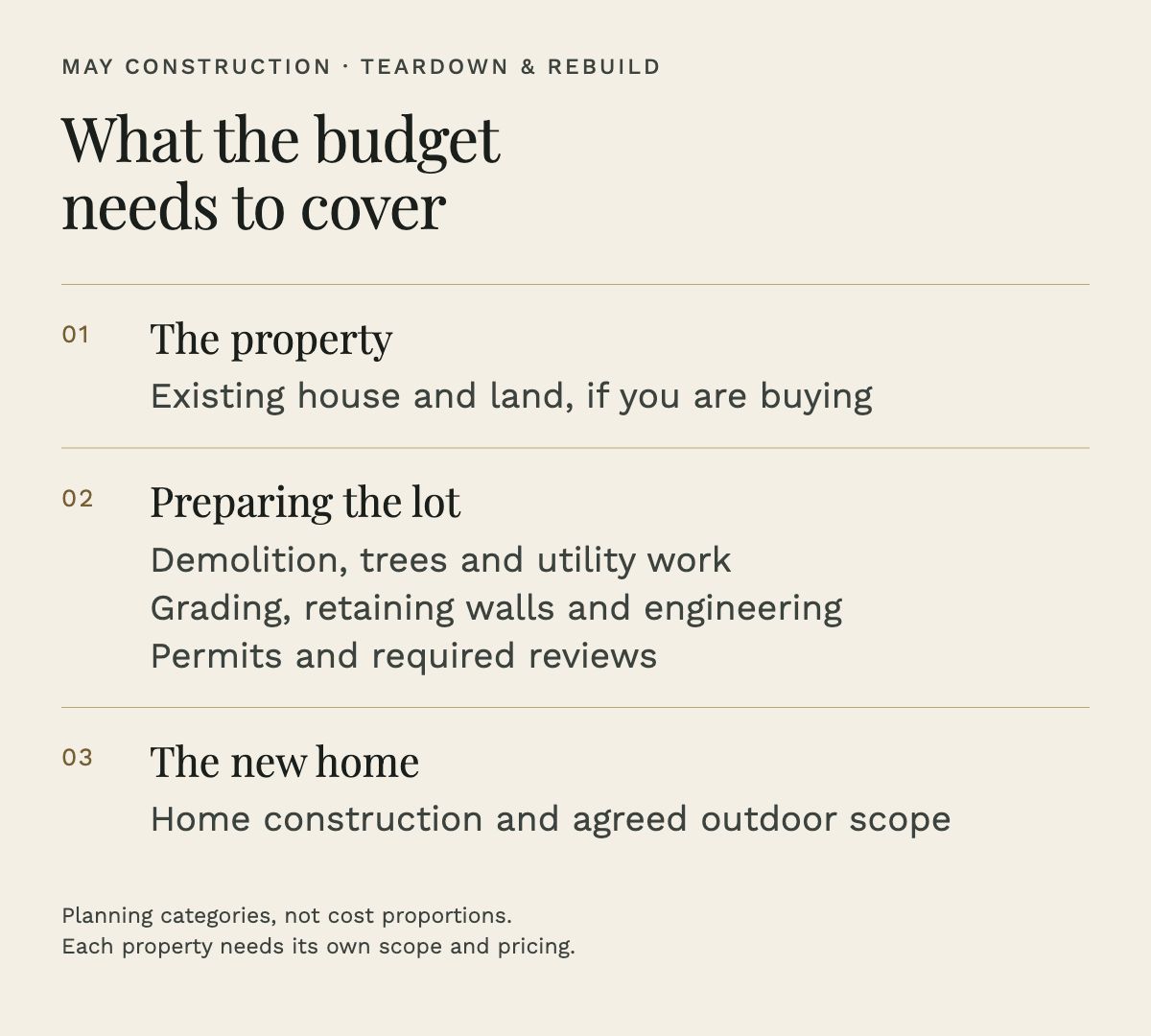
Your budget needs to cover that work as well as construction of the new home. If you don't already own the property, include its purchase price too.
Buying a house for the lot
When you buy a teardown property, you're buying the existing house along with the land. You may be competing with someone who wants to renovate that house or move into it as it stands. According to founder Patrizio Murdocca, the homes May chooses to replace are usually in poor condition, although there are exceptions.
Before buying in Belle Meade, Green Hills or another established neighborhood, check what you can build on the lot. The existing house doesn't tell you how large its replacement can be or where it can sit. Our Nashville lot feasibility guide covers setbacks, easements, utilities and slope.
Confirm which permitting authority covers the property. For lots under Metro Codes, demolition and new residential construction require permits, and the new home's site plan must meet zoning requirements. Metro's residential permit guidance explains what the plan needs to show.
If a historic overlay applies, contact the Historic Zoning Commission about its preservation permit process before assuming the house can be removed.
What affects demolition costs?
Brick and stone are heavy to haul away. Removing a basement, concrete slab or block foundation is another part of the job. Detached garages, sheds and pools can add to it.
“Demolition costs can vary greatly, just depending on what the home was made of originally.”
Patrizio Murdocca, founder of May Construction
A quote should make clear whether it covers all of those structures. For properties under Metro, Debris Management Review also needs approval before a demolition permit can be issued.
At May, salvage comes first. A nonprofit partner goes through the house to recover usable items, including appliances, doors and light fixtures. The partner sells them to support mission work. May takes no share of the proceeds, and those items stay out of the dumpster. Once the salvage work is finished, demolition can begin.
Getting the lot ready for the new home
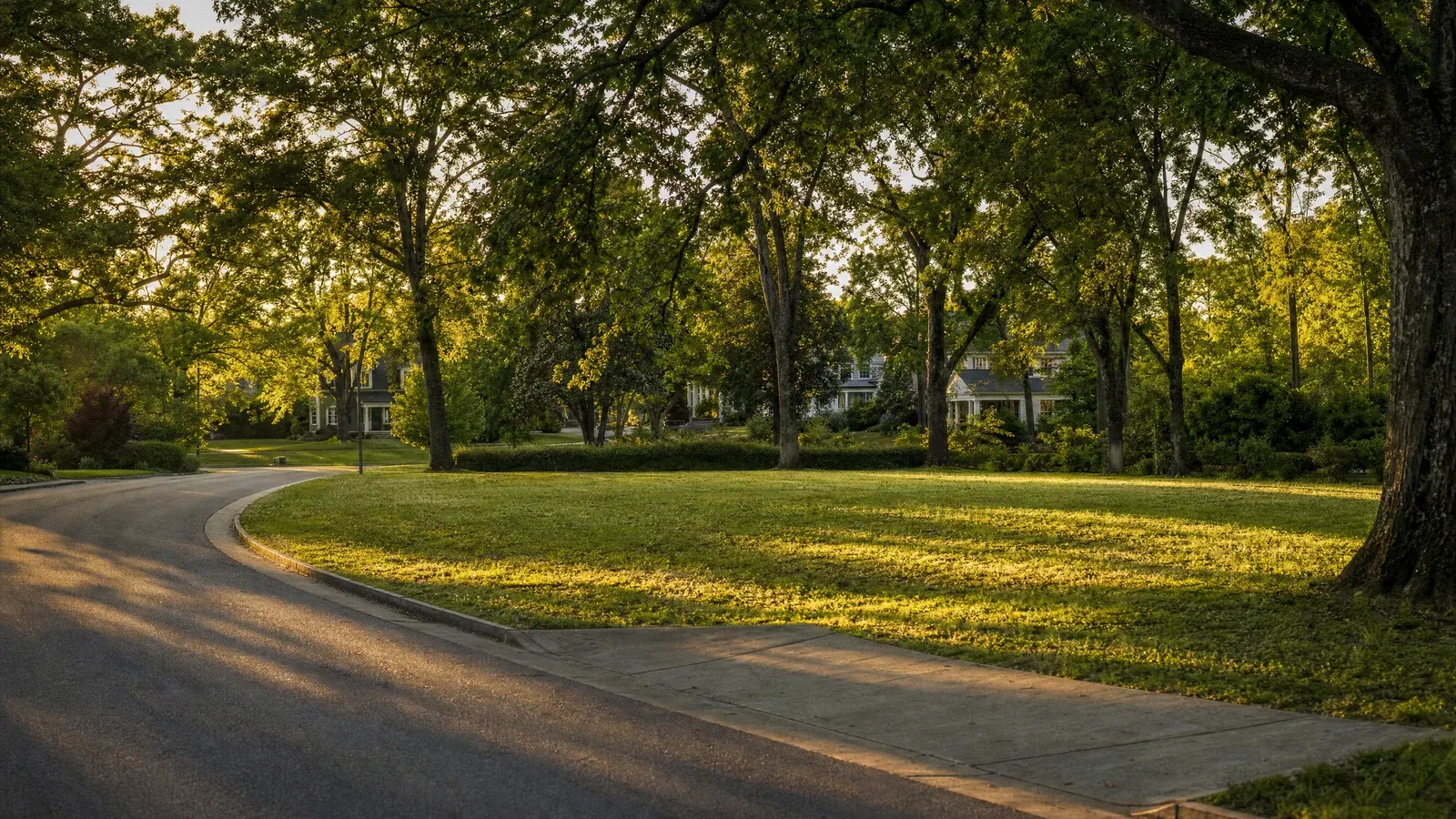
An older lot may already have utilities and mature trees, but the new home may need more space or a different layout. The driveway and outdoor areas also affect how much work the property needs.
Existing utilities may need an upgrade
An existing water or sewer connection can save money if it can serve the new home. On some projects, though, the service is too old to reuse. May has to replace or upgrade it, and that work becomes part of the cost of preparing the lot.
Deciding which trees can stay
May aims to preserve as much of the original treescape as possible. The team considers the trees' health and how they fit around the house, driveway and planned outdoor spaces. A tree within the new home's footprint may need to come out, while branches overhanging an upper floor may only need trimming. Trees that are unhealthy or pose a risk may also need removal.
Making room for a usable backyard
Patrizio describes a familiar situation in West Meade: a sloping lot with a retaining wall close behind the old house. There may be very little flat yard before the hillside begins.
Where the property allows it, May can remove soil and build a larger retaining wall farther back. Moving the slope away from the house creates more level space in the backyard. The earthwork and wall are part of the cost of creating that usable space.
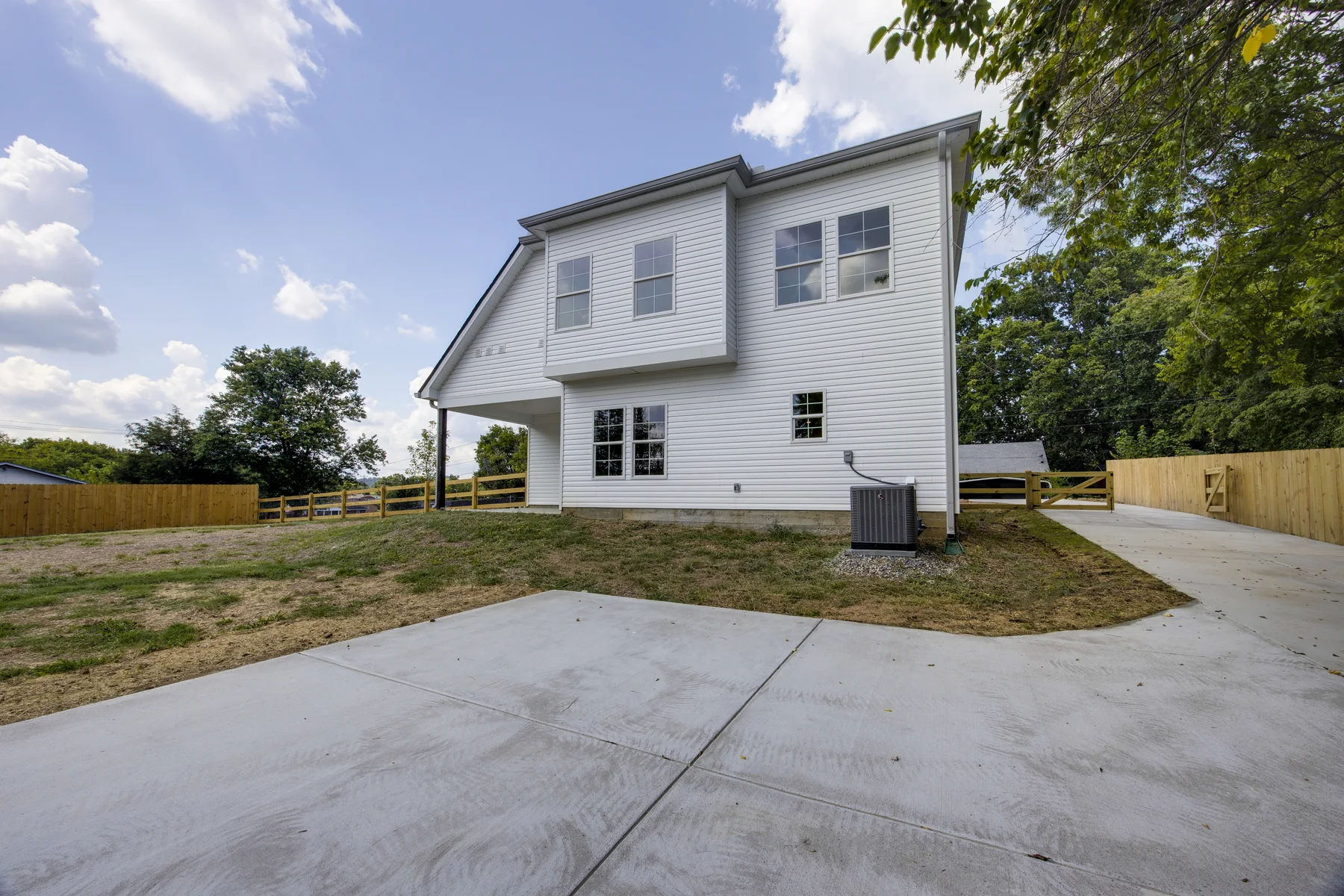
The yard and driveway at May's Leondale home.
Engineering and drainage
May uses civil and structural engineers on most of its projects. Older lots may need updated studies and stormwater structures, particularly where drainage connects to the city's infrastructure.
What to settle with your builder
Before relying on an estimate, make sure you understand what it covers. A conversation about the property should answer these questions:
Does demolition include the foundation, detached buildings and any pool?
Can the existing water and sewer connections serve the new home, or do they need work?
What tree work, grading or retaining walls will the proposed layout require?
Are engineering, drainage work and required permits or reviews included? What still needs investigation?
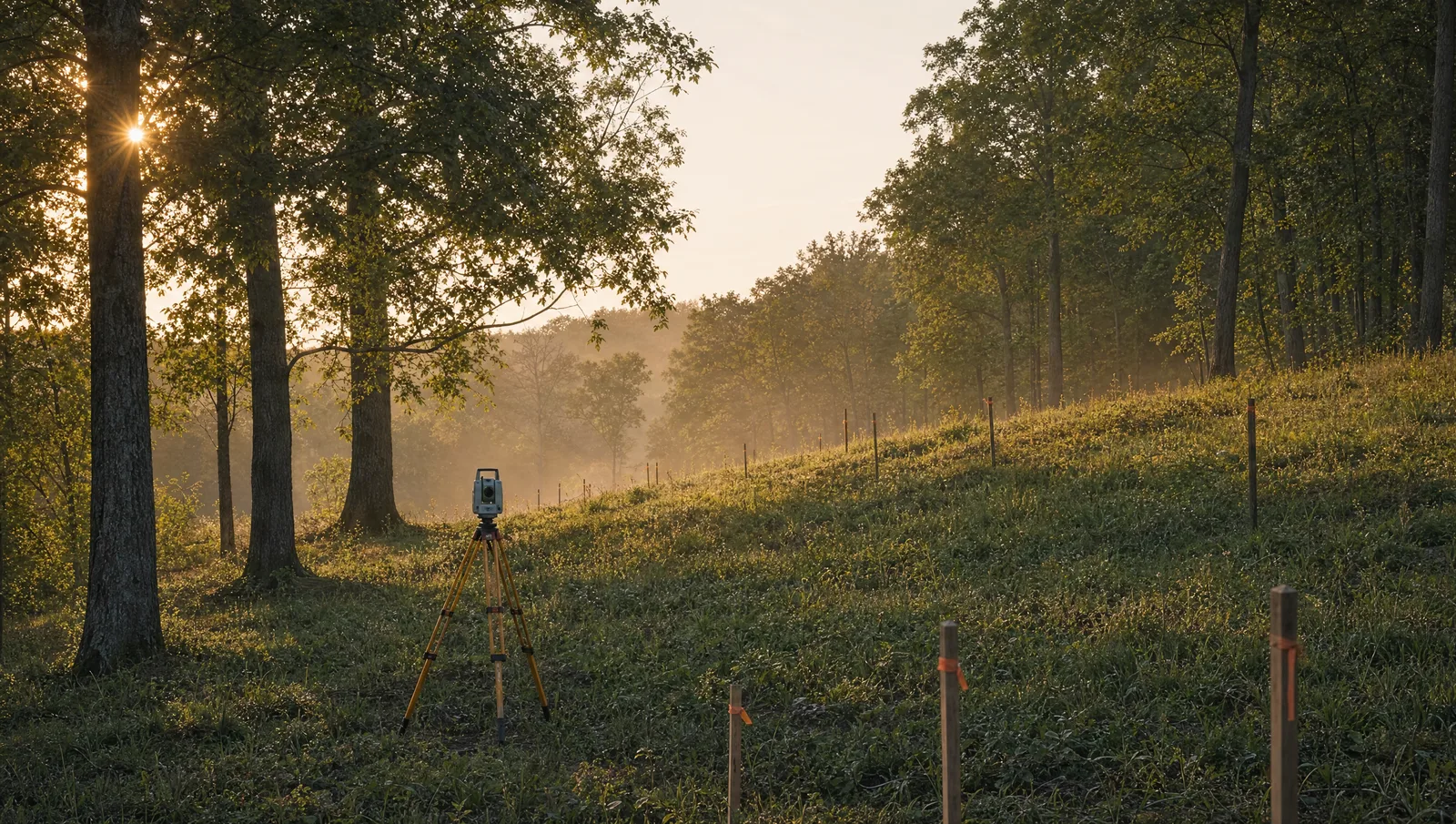
Bring a survey if you have one, along with property photographs and your plans for the home and yard.
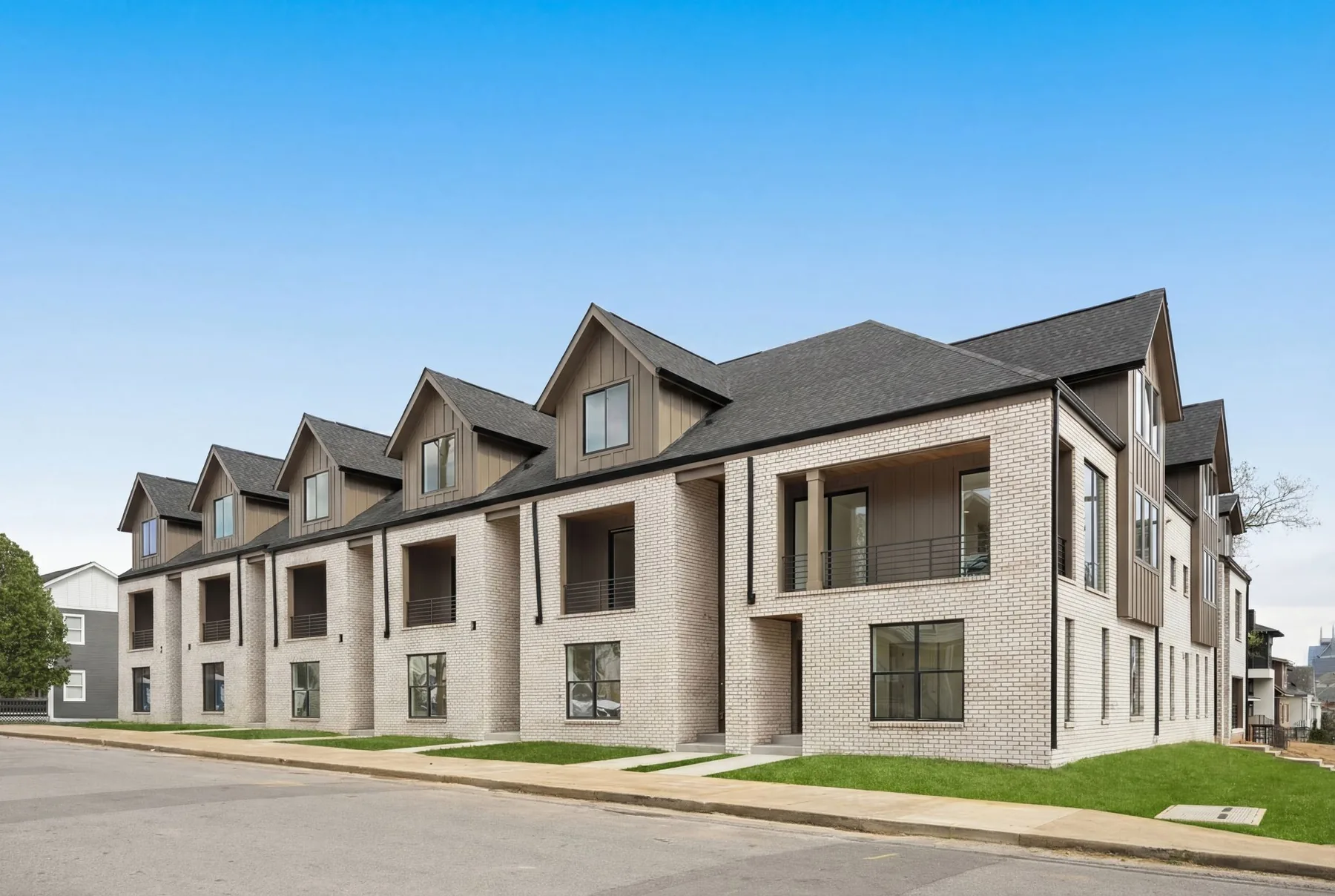
The house itself needs a construction budget based on its size, design and finishes. Our guide to custom-home costs in Nashville covers that part of the project.
If you have a property in mind, start with May's build-on-your-lot process.
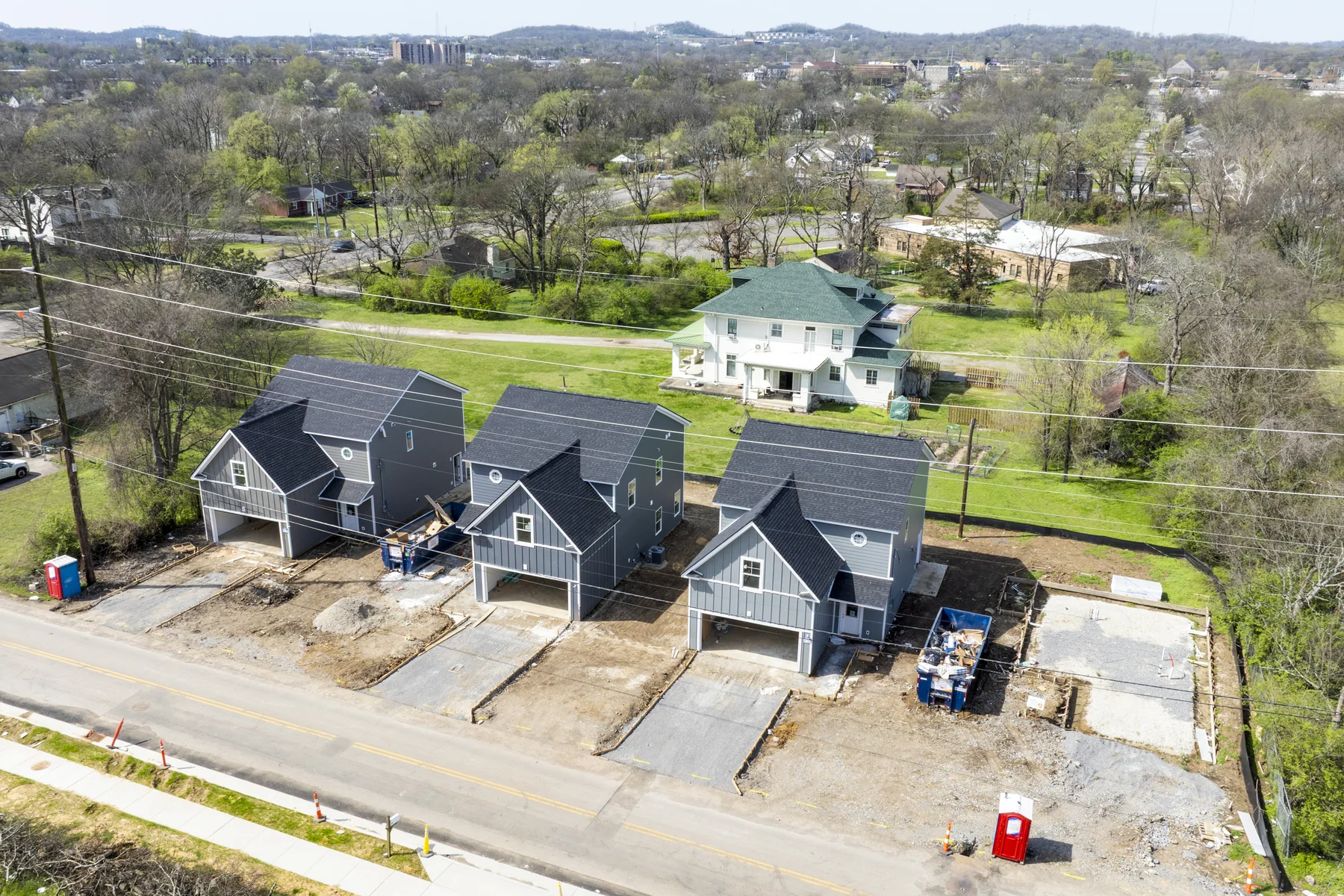
Based on a conversation with Patrizio Murdocca, founder of May Construction. Cover photograph: Forest Park during construction.
Questions, answered
- How much does it cost to tear down a house in Nashville?
- The price depends on what needs to be removed. Brick or stone, a basement, the foundation and a pool all affect the job. Have the builder look at the house and any detached structures before estimating demolition. Also allow for the rest of the site work and the new home.
- Can existing water and sewer connections be reused after a teardown?
- Sometimes. Reusing a suitable connection can save money, but old water or sewer service may need replacing or upgrading. The builder needs to confirm that it can serve the new home before you count on those savings.
- What site costs should a teardown-and-rebuild budget include?
- Allow for demolition and the work the new layout requires. That can include tree work, utility upgrades, grading and retaining walls, along with engineering and drainage work. The estimate should also account for required permits and reviews, and make clear what still needs investigation.
- Do I need permits to demolish and rebuild a house in Nashville?
- Yes, for properties under Metro Codes, both demolition and new residential construction require permits. A historic overlay may require further review, and Metro must approve Debris Management Review before issuing a demolition permit. Check which authority covers your property before making plans.