Build on Your Lot in Nashville: Feasibility Guide
Reviewed by Patrizio Murdocca, Founder of May Construction
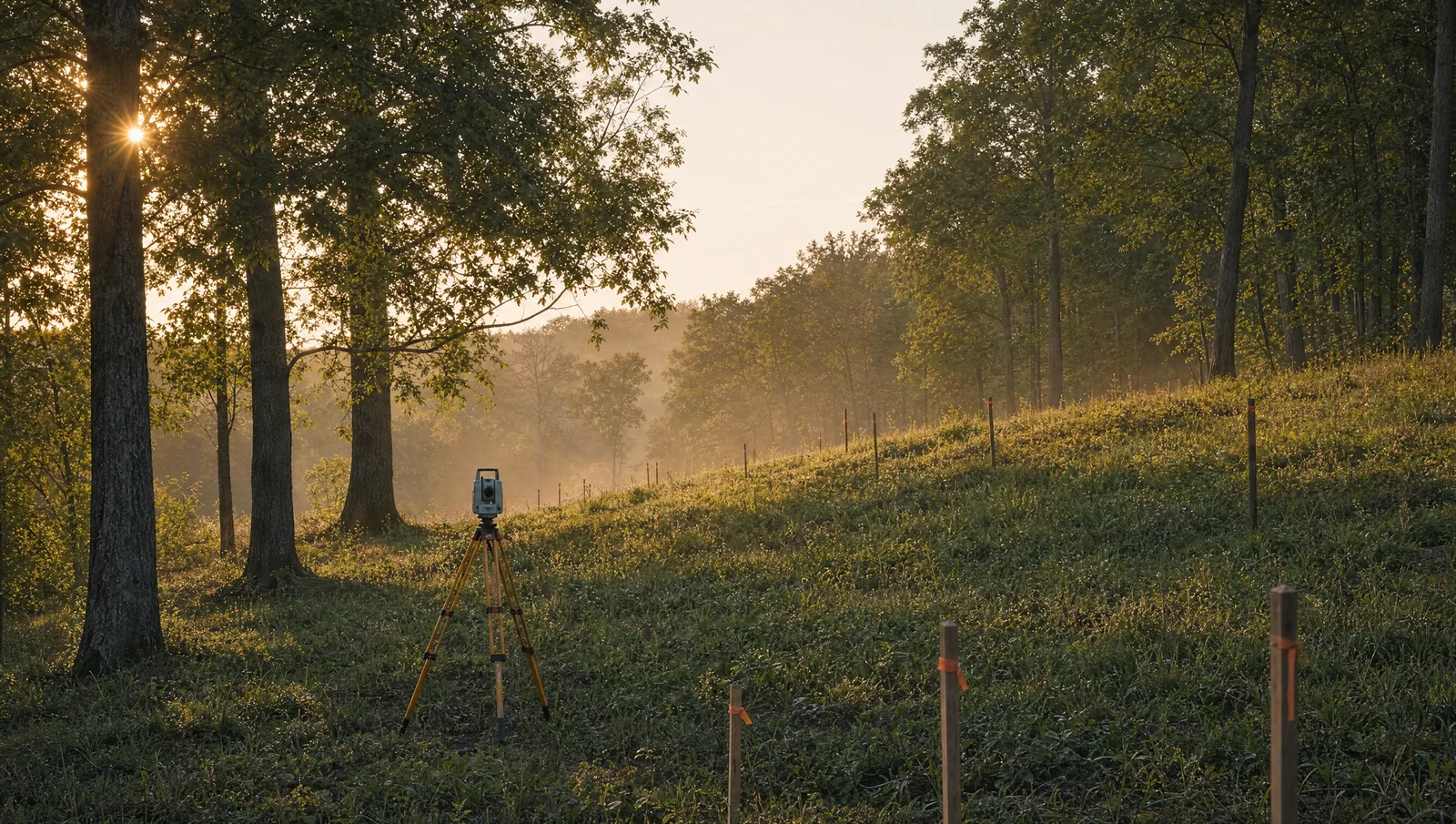
You own the land, or you're about to. Before you fall in love with a floor plan, the question that matters is what the lot actually allows. This is the framework we use on every site walk across Nashville and Williamson County, the things we read before we draw anything, and what each one does to your budget and timeline.
Key takeaways
Setbacks, zoning, and easements define your buildable envelope, and it's usually smaller than the parcel makes it look.
Which rules apply depends on the address: Metro Nashville, a satellite city like Forest Hills or Oak Hill, or Williamson County for Brentwood and Franklin.
Utilities already at the street are a different project from utilities that have to be brought in. Every May build files four utility applications alongside the permit package.
Slope, trees, and an existing house are usually assets, not dealbreakers, but each one moves the site-work budget, so read them before you commit.
If you haven't closed on the lot yet, have it evaluated first. We do that before you go under contract.
Setbacks: what the street expects, what the rules allow
Every lot carries lines you can't build past, front, side, and rear setbacks set by zoning. Between those lines is your buildable envelope, and it's often smaller than the parcel makes it look. Easements shrink it further: a utility or drainage easement can take a slice of ground the deed says is yours.
Whose rules apply depends entirely on the address. In Davidson County, permits and zoning questions run through the Metro Nashville Codes Department. But several of the neighborhoods we build in are small cities in their own right, the City of Forest Hills is its own municipality, and Oak Hill's low-density zoning is the reason the area never feels crowded. Belle Meade's deep setbacks are part of why its streets read the way they do. Two lots of the same size, a mile apart, can carry very different envelopes.
The street matters too. What the neighboring homes expect from massing and placement shapes what belongs there, not just what's permitted.
An hour on the lot tells us more than a survey ever will.
But the survey still matters. Design at Native, our in-house studio, starts from your topographical survey, so the plan is drawn to the envelope you actually have, not the one the aerial photo suggests.
Utilities: what's at the street, what has to come in
Water, sewer, power, gas. What's already at the street versus what has to be brought in changes both cost and timeline, and it's harder to see from the curb than grade or trees.
On every May build, the permit package goes in alongside the four utility applications that clear the project for build. Permit review itself can run anywhere from a few days to a few months depending on the municipality, one more reason the jurisdiction question is worth answering before you buy. If a lot needs more than a standard connection, you want to know before you commit to it, not after.
Grade: slope is a feature until it isn't
Usually a sloped lot is workable, and often those are the best lots. Grade shapes the design rather than fights it: walk-out lower levels, framed views, a drive that arrives the way it should. But grade also drives foundations, drainage, and site work, so how the land falls toward the tree line is one of the first things we read on a walk.
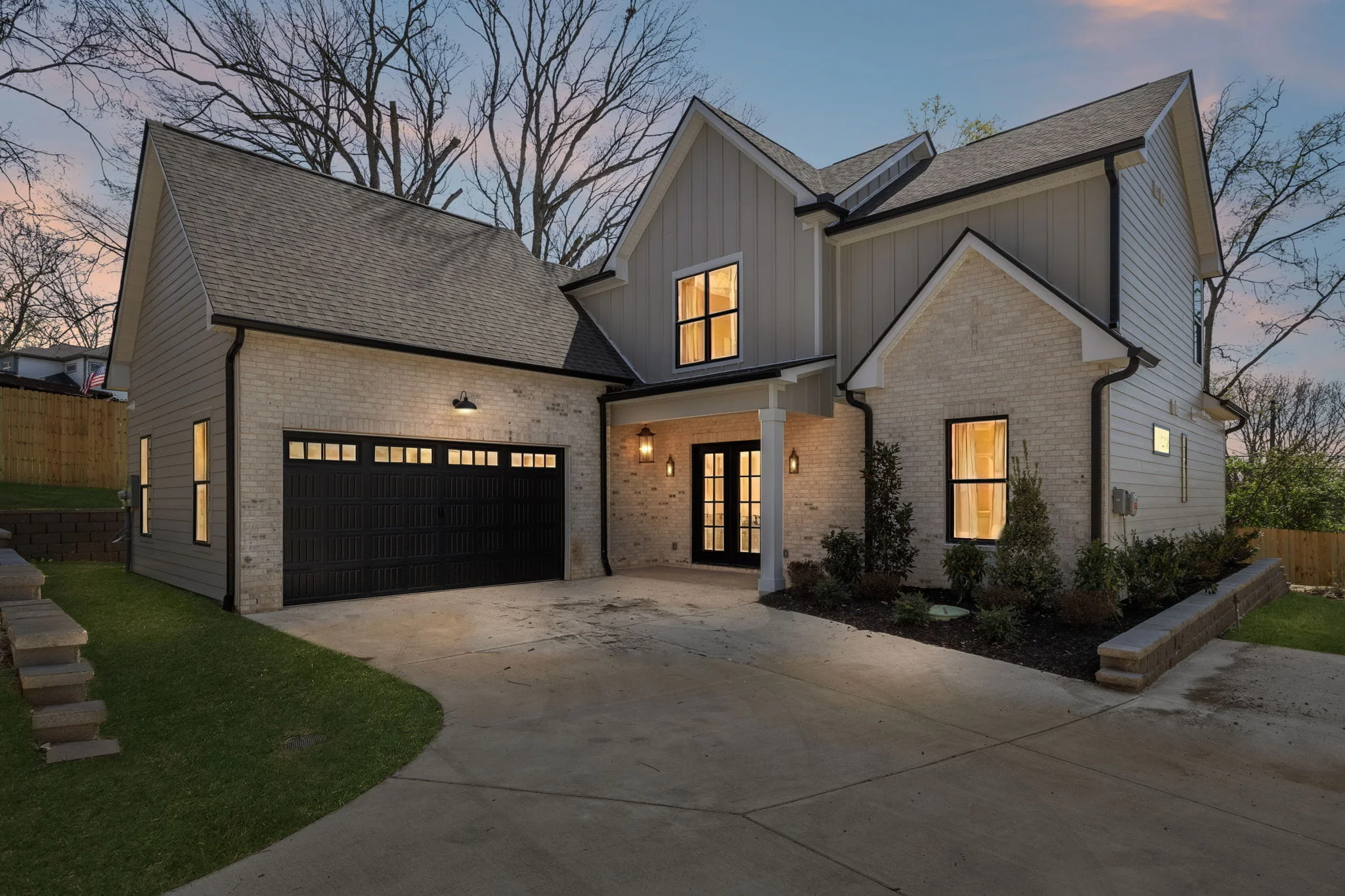
Two homes in our portfolio show what that looks like in practice. At 621B Westboro Dr in Charlotte Park, the lot is a sloped corner, and the build treats that as a feature, a stone retaining wall holds the lawn above the drive court, and the side street gets a real two-story elevation, because a corner home shows two faces to its neighborhood. At 123 Glen Leven Way, the block foundation simply steps down with the grade. Neither lot needed to be flat. Both needed to be read correctly.
Trees: design to them, not through them
Mature trees are usually why you bought the lot. We design to the light, the grade, and the trees, not to a floor plan looking for an address. Which trees stay, which go, and how the house sits among them is a design decision made early, on the land, with you.
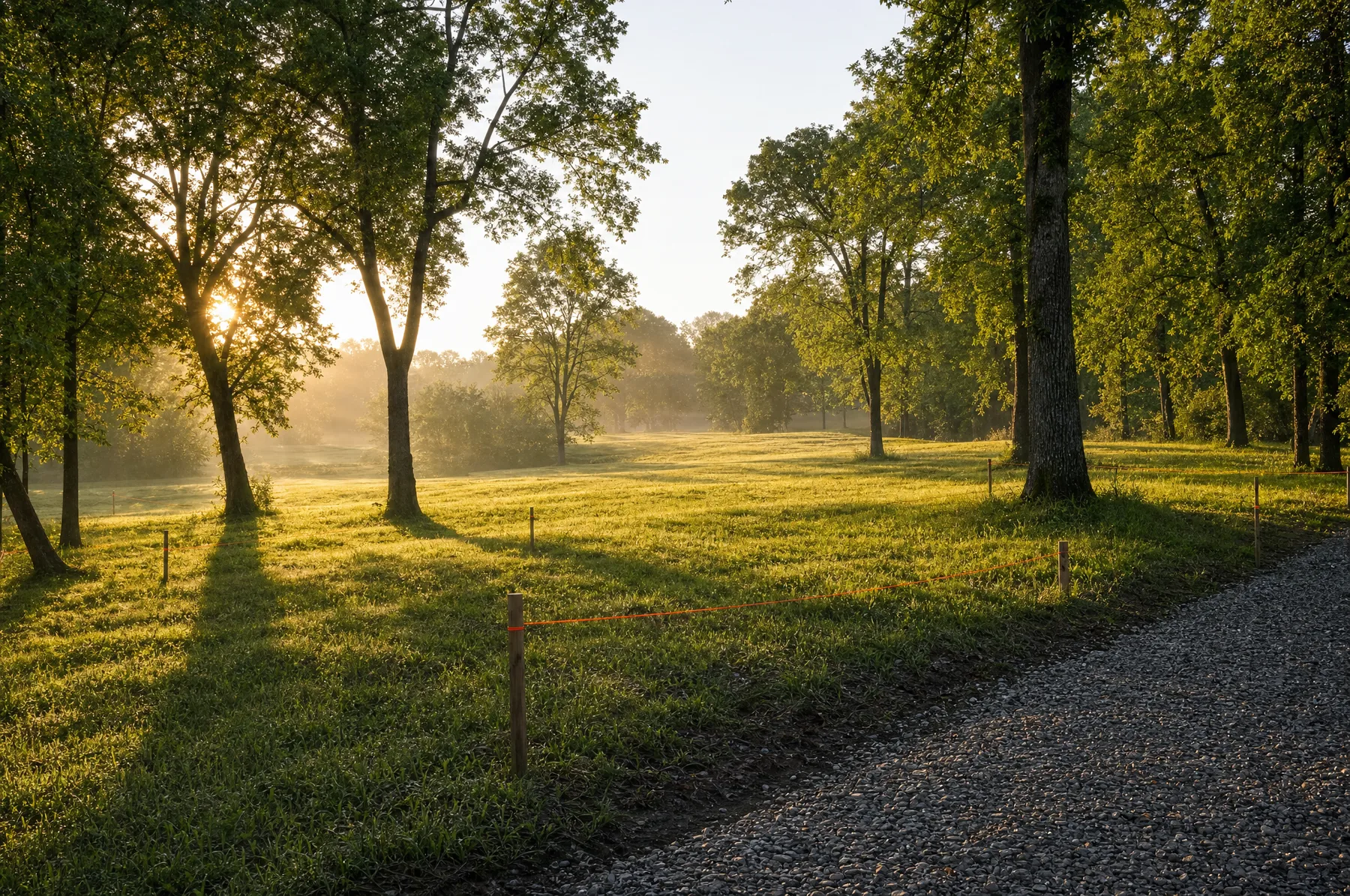
In Forest Hills, where lots run to wooded acreage and many back up to Percy Warner Park, the homes built well tend to disappear into the tree line rather than announce themselves from the street. That isn't an accident of the neighborhood. It's a siting decision, made before the first drawing.
The fifth factor: what's already on the lot
A teardown is a normal start for us. We handle the demolition as part of the project, and the existing house often tells us useful things, where the light lands, what the street expects, why the old floor plan didn't work.
In Green Hills, this is the default path: the neighborhood's older ranch and Cape Cod lots are prime candidates for a teardown-and-rebuild, and most buyers there are trading a smaller, dated house for a new one on the same footprint. Rebuilding on an existing footprint also keeps scope more predictable than a raw-land build, the utilities are already at the street, and the lot has been settled for decades.
An existing structure is rarely a reason to pass on a good lot. And if you own a lot that no longer fits your plans, selling it to a builder directly is a real option, we make fair, off-market offers on lots in the neighborhoods where we build.
What the lot does to your budget
Every factor above moves the number, but the lot itself sets the band. In Green Hills, teardown-and-rebuild projects typically run $1.5M to $3M. In Franklin, custom builds run $1.2M to $4M depending on where you're building, in-town infill runs leaner than acreage toward the edge of the county. And in Belle Meade, the larger estate lots can support builds from $2.5M to the top of the market.
The spread inside each range is the point: the same floor plan on two different lots is two different budgets, because site work, utilities, and foundations differ before a single finish is chosen. We break the drivers down in our guide to what a custom home costs in Nashville. What holds on any lot: the budget locks before the build starts, with every bid checked against an independent takeoff.
Before you sign: a short checklist
If you're evaluating a lot right now (under contract or about to be) these are the questions worth answering first.
Confirm the jurisdiction. Find out whether the address answers to Metro Nashville, a satellite city, or Williamson County, that decides whose setbacks and zoning you're working with.
Ask what's at the street. Which of the four (water, sewer, power, gas) is already there, and which has to be brought in.
Walk it more than once. Where the morning light lands, how the grade falls, how a drive would arrive. The lot reads differently in the morning than it does at five o'clock.
Get a builder's read before you go under contract. We evaluate lots at exactly that stage, what the setbacks, grade, and utilities really allow, and whether the home you want fits the land you're looking at.
Verify the license. Any builder you're talking to should hold a current license, which you can check with the Tennessee Board for Licensing Contractors.
What this costs to find out: a conversation
None of these factors can be priced from an aerial photo, and every one of them moves budget and timeline. The way to a real answer is a site walk.
Start on our build on your lot page, tell us about your land, and we'll call within two business days. The full design-to-keys sequence, from discovery through walkthrough, is on our process page.
Questions, answered
- Can May evaluate a lot before I buy it?
- Yes. If you're considering a lot, we can walk it before you go under contract and give you a straight read on what the setbacks, grade, and utilities really allow, and whether the home you want fits the land you're looking at. Tell us about the lot through our build-on-your-lot page and we'll call within two business days.
- What if I haven't found land yet?
- We acquire lots across Nashville's established neighborhoods and can pair you with one, or evaluate a lot you're considering before you commit. Tell us where you want to be and we'll tell you what we know about it.
- Does a sloped or wooded lot cost more to build on?
- Not automatically, often those are the best lots. Grade drives foundations, drainage, and site work, so it moves the budget, but it also gives the design walk-out lower levels, framed views, and a drive that arrives the way it should. The honest number comes from a site walk, not an aerial photo.
- When does design actually start?
- After the site walk, and once your topographical survey is in hand. Native, our in-house design arm, draws the floor plan, interior selections, and landscape as one connected package from that survey, so the plan fits the envelope your lot actually has.