Questions to Ask a Custom Home Builder in Nashville, Plus Red Flags
The questions to ask a custom home builder come down to three things: can they legally build your house, will the price and the paperwork hold up, and who will actually run your site. In Tennessee you can check the first one yourself in a few minutes, because any contractor bidding a project of $25,000 or more needs a state license. The rest you learn from how a builder answers the questions below, and from what they avoid saying.
What should you check before the first meeting?
Do the public-record homework first. It takes an evening, and it turns the first conversation from a sales pitch into an interview. Look up the state license, the business registration, and any court filings on your own. Then, the first time you call, ask for an insurance certificate sent by the builder's agent. A builder who is glad to send it has already told you something.
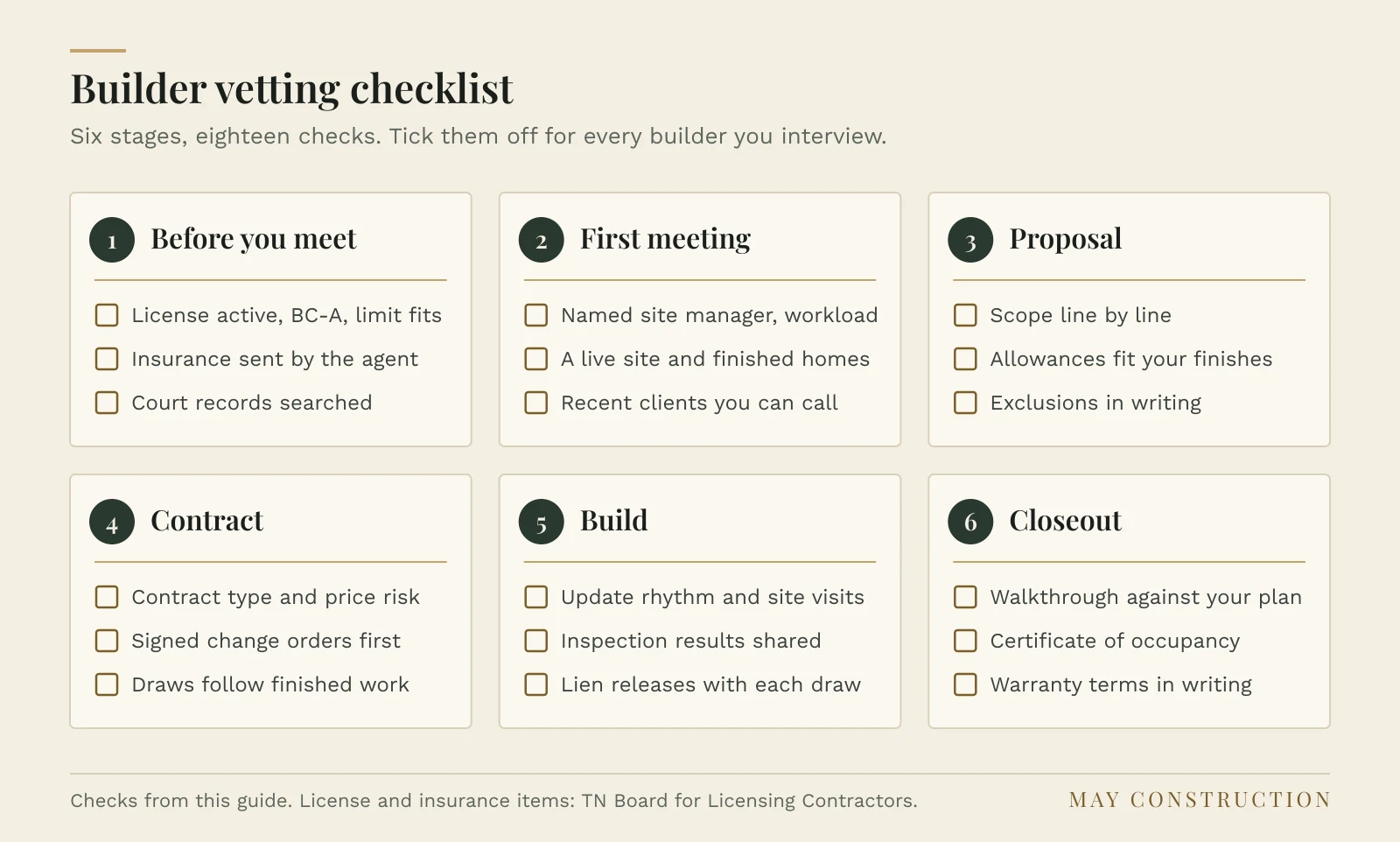
Order matters here. Ask the right questions at the right stage and you avoid two common mistakes: falling for a builder's portfolio before you know they can legally sign your contract, and arguing about finishes before you know what the price actually covers. The card below puts the whole sequence on one page. Save it to your phone or print it, and tick it off for each builder.
How do you verify a Tennessee contractor's license?
Tennessee's Board for Licensing Contractors says a contractor's license is required before contracting, including bidding or negotiating a price, for projects of $25,000 or more. A custom home is far past that line, so any builder quoting you should hold a current state license. Here is how to check:
Open the Board's Verify a License search, linked from the Board for Licensing Contractors home page.
Search the exact business name that will appear on your contract. An LLC and its owner are different parties, so the name has to match.
Confirm the status is active and the classification covers residential building. The Board's residential building classification is BC-A.
Read the monetary limit. The Board defines it as the total dollar amount for each individual project or contract, with a 10% tolerance on most licenses. A $2 million home needs a license with a limit to match.
Check the qualifying agent, the person who took the state exams for the company. The Board's qualifying agent lookup shows which agents are tied to each licensed contractor.
Two more details are worth knowing. The Board allows a Restricted Residential Limited License for work under $125,000, so a builder holding that license cannot sign a custom home contract. And if part of your plan is a remodel rather than new construction, Davidson County is one of the counties where the state requires a Home Improvement license for residential projects from $3,000 to $24,999. For complaint and disciplinary history, the state's consumer guidance says to call the Board at (615) 741-8307 or email contractors.home-improvement@tn.gov.
How do you check a builder's insurance?
Ask for a certificate of insurance, and ask for it to come straight from the builder's insurance agent rather than as a PDF forwarded from the builder's inbox. The Tennessee Attorney General and the Department of Commerce and Insurance advise consumers to request copies of the contractor's insurance certificates showing a current effective date covering workers' compensation, damage, and general liability. The Board also requires general liability and workers' compensation coverage (or proof of an exemption) as a condition of the license itself.
When the certificate arrives, read four lines: the named insured (it should match the contract), the policy dates (they should run past your expected start), the liability limits, and whether workers' compensation is listed at all. Then ask how the builder confirms coverage for the trade partners on your site. A builder who tracks subcontractor certificates will describe the process without hesitation.
How do you search court records on a builder?
Search by the company name, any prior company names, and the owner's name. In Nashville, the Davidson County Circuit Court Clerk runs CaseSearch, which looks up filed cases by party name across General Sessions civil, Circuit, and Probate courts. Other courts keep their own records, and so does each county. If a builder works in Brentwood or Franklin, check the Williamson County clerks as well. While you are at it, look the company up in the Secretary of State's business entity search to confirm it is active and to see when it was formed.
Read what you find with some judgment. A lawsuit is an allegation, not a verdict, and a builder with years of work may have a dispute or two on file. What deserves a direct question is a pattern: repeated claims from clients or suppliers, liens from unpaid trades, or a company that closed and reopened under a new name. Ask the builder about it plainly. How they explain it tells you as much as the record does.
What questions should you ask at the first meeting?
The first meeting is where you learn who will actually build your house. The National Association of Home Builders suggests asking for references from recent buyers and about the builder's warranty program; both belong on your list, along with these:
Who runs my site day to day, and how many other homes will that person be running at the same time?
Can I see two or three homes you finished recently, and one that is under construction now?
May I speak with clients from your last few builds, including one whose project had a problem?
Who designs the house, and how many rounds of revisions are normal before the plans go to permit?
Are landscape and site design part of your scope, or a separate contract I manage myself?
What insulation, window, and heating and cooling standards do you build to, and can I see the specifications?
How do you decide whether my lot and my budget are a fit before we spend money on design?
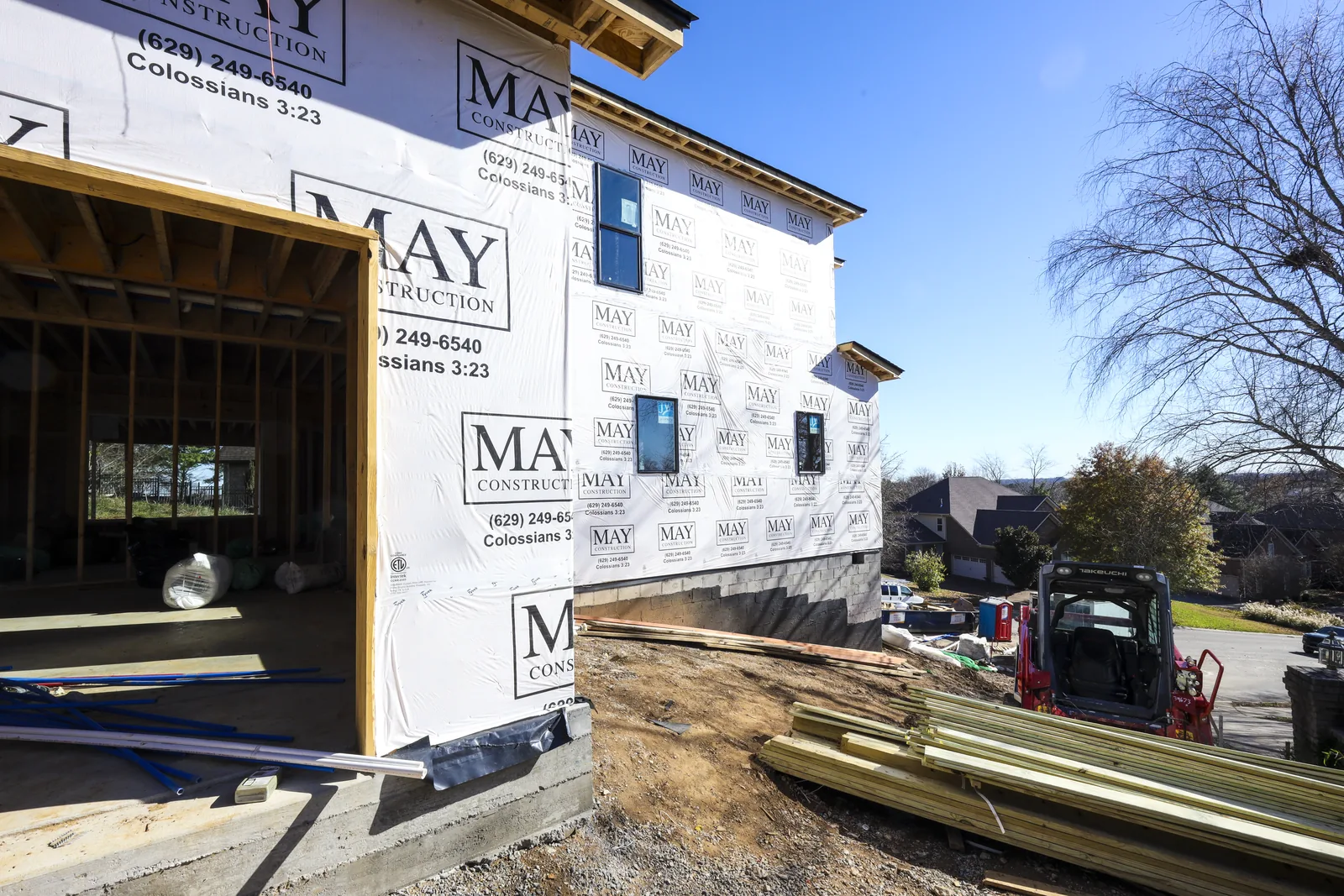
A strong answer names people and describes a process. A weak one returns to adjectives. A live site tells you things a finished photo cannot: how materials are staged, how the house is protected before it is dried in, how the foundation steps with the grade. Our 123 Glen Leven Way page shows one mid-build, and our process page lays out the sequence we would walk you through, from discovery to the final walkthrough. If you are still deciding between a custom builder and a plan-library builder, our guide on custom versus production builders covers how design, price, and timeline differ between the two models.
What should you ask about the proposal and the contract?
Price questions are where builders separate. Ask what the number includes and excludes: design, permits, utility connections, site work, landscaping, and the builder's fee. Ask how allowances were set and whether they reflect the finishes you actually described. Then ask how the contract will behave once construction starts:
What type of contract is this, and what happens to the price if costs change? Our guide to cost-plus versus fixed-price contracts explains the trade-offs.
How are change orders priced and approved, and do I sign each one before the work happens?
What is the payment or draw schedule, and does each payment follow completed work? If you are financing, our guide to construction loans in Tennessee covers how lender draws usually work.
Who pulls the building permit? The builder should. Our Nashville permits guide shows what that review involves.
What warranty comes with the home, what does it cover, and for how long? Get the answer in writing.
On deposits, Tennessee's home improvement law bars contractors from asking for more than one third of the contract up front, according to the state's consumer tips. That rule is written for remodeling work, and new-home contracts usually run on a draw schedule instead, but the principle carries over: payments should not get ahead of the work. The same guidance says a contract should spell out start and completion dates, payment terms, allowances, materials, labor, change orders, and warranty information. This is general information, not legal or financial advice. Have a Tennessee construction attorney review the contract, and talk to your lender about the draw terms, before you sign.
What should you ask during the build?
Once construction starts, the questions shift from promises to proof. Ask how often you will get updates and in what form, when you can walk the site, and who tells you when an inspection passes or fails. Ask how you will see that trade partners and suppliers are being paid; lien releases collected with each draw are one common way to show it. And ask what happens when a selection is back-ordered or a field condition changes the plan.
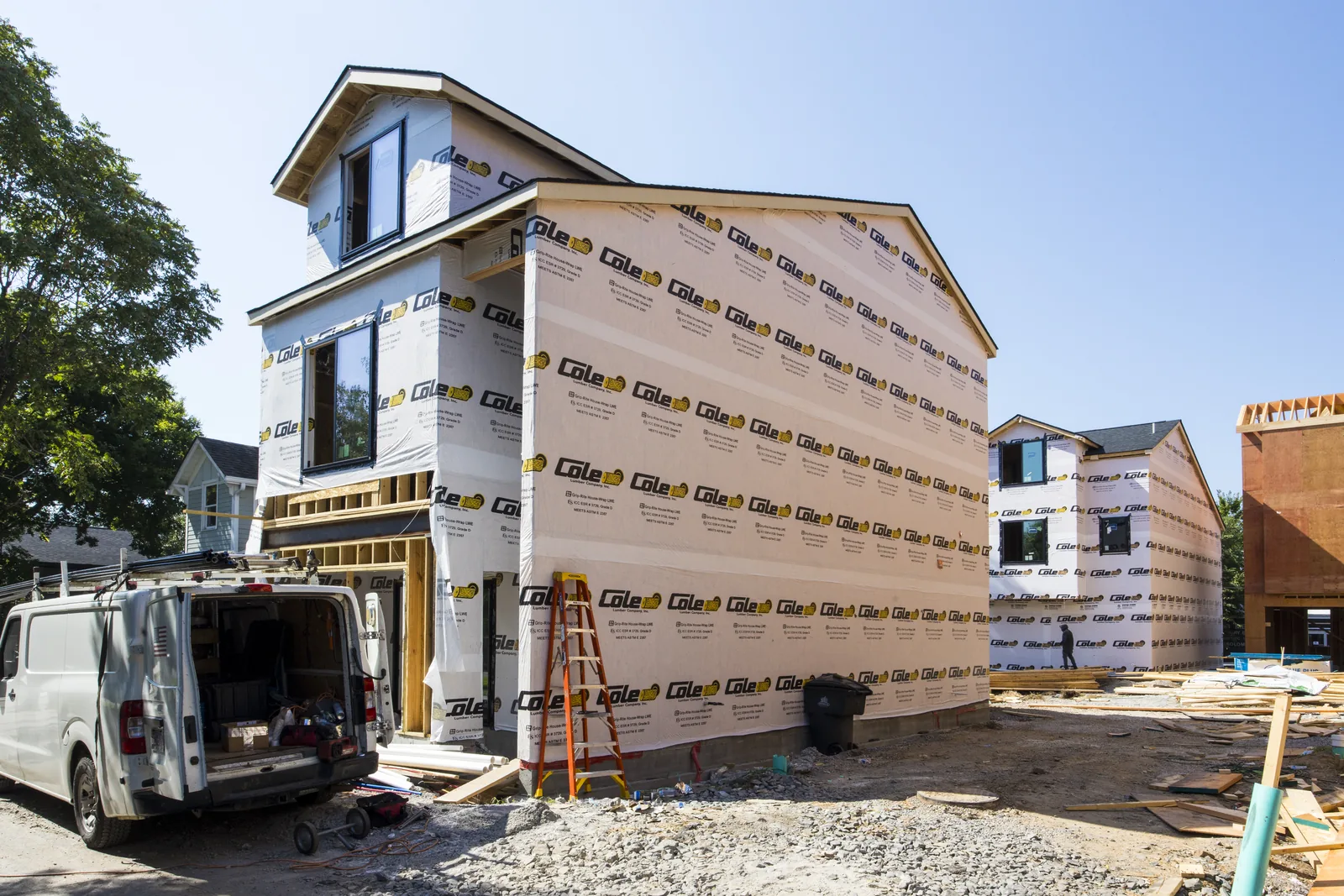
Framing and rough-in are when most change requests surface, because it is the first time a family can stand in the rooms. A builder with a clear change process makes that moment easy. A builder without one makes it expensive. You can see how that stage looks on a real project in the 909 Cheatham Pl photographs, taken during framing and dry-in.
Closeout deserves its own question before you sign: what standard governs the final walkthrough? Some builders walk the house against their own punch-list standard. Others walk it against the plan and selections you approved. Know which one you are getting, and what paperwork you leave with: the certificate of occupancy, warranty documents, and final lien releases.
What are the red flags when choosing a home builder?
Some warning signs come straight from the state. In its consumer guidance, the Tennessee Attorney General's office and the Department of Commerce and Insurance list reluctance to pull permits, cash-only payment, demands for full payment up front, and refusal to put terms in writing. For a custom home, add these:
The license name, the insurance certificate, and the contract name do not match.
The license monetary limit is below the value of your house, or the builder asks you to split the work into phases.
A bid comes in well below the others and the allowances are vague or unusually low.
Pressure to sign this week to hold a price or a start date.
No finished homes you can visit and no recent clients willing to talk.
Nobody can tell you who will run your site or how many projects that person carries.
Change orders are handled verbally, or priced after the work is done.
A pattern of court filings the builder will not discuss.
One flag rarely settles the decision on its own. Two or three together usually do.
A builder scorecard you can print
Bring this table to each interview and fill it in for every builder you talk to. The middle column is what a strong answer includes. The right column gives examples of weak answers, paraphrased the way they tend to sound, not quotes from any builder. Hear one of those and slow down.
| Question | A strong answer includes | Red flag answer (example) |
|---|---|---|
| Are you licensed for a project this size? | License number, BC-A classification, a monetary limit above your budget, and the exact company name | Licensed under a partner's company, or a limit below your project |
| Can I see your insurance? | A current certificate sent by the agent, with general liability and workers' compensation | Only a forwarded PDF, expired dates, or no workers' comp |
| Who runs my site? | A named project manager and how many homes they carry | Whoever is free that week |
| Can I talk to recent clients? | Several names from recent builds, including a hard project | Only online reviews, or references from years ago |
| What does the price include? | A line-by-line scope with allowances tied to your selections | One round number with little detail |
| How are changes priced? | A written change order, priced and signed before work starts | We'll settle up at the end |
| What is the payment schedule? | Draws tied to completed stages, with lien releases | A large deposit or cash up front |
| Who pulls the permit? | The builder, in the builder's name | You should pull it yourself |
| What warranty do I get? | Written terms, what is covered, for how long, and how to file a claim | We take care of our clients |
| What governs the final walkthrough? | The approved plan and selections, with documents at closeout | Our usual standard, not written down |
How does May answer these questions?
We would rather you ask us every question on this page than skip them. A few answers are already public. Patrizio Murdocca, our founder, reviews every plan version personally before it goes to permit. Nothing gets bid until your selections are locked, and every incoming bid is checked against an independent takeoff before the budget locks. If a design change happens after that, the affected trades are re-bid and the budget is updated openly. One project manager runs your site, and the final walkthrough is done against the plan and the selections sheet you approved, line by line.
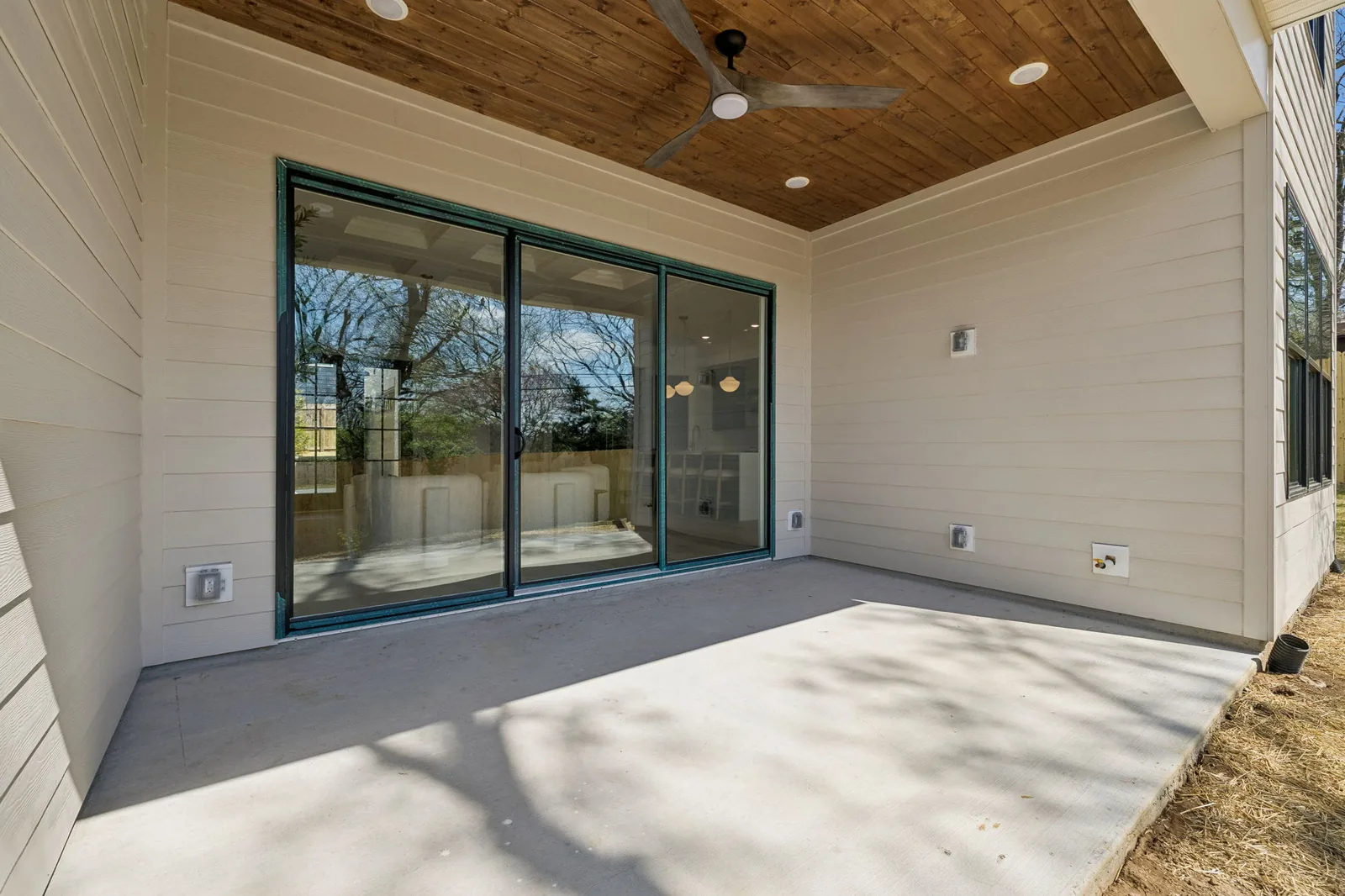
Our finished and in-progress homes, including 621B Westboro Dr, a sloped corner lot in Charlotte Park, are on the site with their real photography. Our office is in Brentwood, and we build across Nashville's established neighborhoods. If you want to know who would answer these questions on your project, meet the May team and read how we work. When you are ready to put the scorecard to us, send us your lot and your questions.
Questions, answered
- What questions should I ask a custom home builder?
- Start with whether they are licensed for a project your size, whether their insurance is current, and who will run your site day to day. Then ask what the price includes, how change orders are priced and approved, how payments follow completed work, and what warranty you get in writing. A good builder answers each one with names, documents, and a process.
- How do I check if a contractor is licensed in Tennessee?
- Use the Verify a License search on the Tennessee Board for Licensing Contractors website and enter the exact business name on your contract. Confirm the license is active, covers residential building, and carries a monetary limit above your project's value. For complaint history, the state suggests calling the Board at (615) 741-8307.
- Does a home builder need a license in Tennessee?
- Yes, for any project of $25,000 or more. The Board for Licensing Contractors requires the license before the contractor bids or negotiates a price, which means before you ever see a proposal. Some counties, Davidson among them, also require a separate home improvement license for residential remodeling between $3,000 and $24,999.
- What are the signs of a bad contractor?
- Tennessee's consumer guidance lists insistence on cash, full payment up front, reluctance to pull permits, and refusal to put terms in writing. For a custom home, also watch for mismatched company names across the license, insurance, and contract, and a bid far below the others with vague allowances. A builder who cannot name the person running your site is another warning.
- How much should I pay a builder up front?
- There is no single number for new construction, because most custom homes are paid through a draw schedule set by the contract and often by the lender. Tennessee's home improvement law caps remodeling down payments at one third of the contract, and the same idea is a sensible guide here: payments should never get ahead of the work. Have a Tennessee attorney and your lender review the schedule before you sign.
- Should I look up court records on a home builder?
- Yes. Search the company name and the owner's name through the county court clerk, such as the Davidson County Circuit Court Clerk's CaseSearch, and in each county where the builder works. A single filing is not proof of anything, but a pattern of client or supplier claims is worth a direct conversation before you sign.