Cost-Plus vs. Fixed-Price Construction Contracts for a Custom Home

A cost plus construction contract pays your builder the actual cost of the work plus a fee, so you see every cost and carry the risk if those costs run over. A fixed-price contract sets one number before work starts, so the builder carries that risk and prices it in. A guaranteed maximum price (GMP) contract sits between them: cost-plus accounting with a ceiling. For a custom home in Middle Tennessee, what protects you most is how finished your plans and selections are when you sign, and what the contract says about allowances, changes, and records.
What is a cost-plus construction contract?
In a cost-plus contract, you reimburse the builder for the real cost of building your home (labor, materials, subcontractors) and pay a fee on top for overhead and profit. AIA Contract Documents, publisher of widely used standard construction agreements, describes it as reimbursing all the direct costs incurred during a project, plus an additional fee. The National Association of Home Builders' own contract library has a cost-plus form for a custom built single-family residence on the owner's lot, priced as the cost of construction plus profit.
The fee can be set two ways. The AIA's standard cost-plus agreement leaves a blank for the builder's fee and tells the parties to state a lump sum, percentage of Cost of the Work, or other provision.
Cost-plus with a percentage fee
The fee is a percentage of whatever the work ends up costing. If costs rise, the fee rises with them. That is the structure's known weakness: AIA's overview notes that when the builder's profit is tied to total cost, it may reduce their incentive to control costs. NAHB's buyer's guide puts it more bluntly: when everything that goes into the home is marked up, there is no incentive to wisely purchase materials. The same guide says cost-plus can also be the most competitively priced way to build, if you and the builder track the budget and avoid change orders.
Cost-plus with a fixed fee
The fee is a set dollar amount agreed at signing. Costs still pass through to you at actual, but the builder earns the same fee whether the house comes in over or under. Ask how the fee adjusts when you add scope; the AIA form has a separate line for the method of adjusting the fee for changes.
How does a fixed-price contract work on a custom home?
A fixed-price contract, also called lump sum or stipulated sum, is one number for a defined scope. AIA's summary: the contractor agrees to build for a specific amount, regardless of the actual costs incurred. If the builder's estimate was low, the builder absorbs the difference. If it was high, the builder keeps it.
That is why fixed prices carry a cushion. NAHB's guide points out that a builder on a fixed bid has to make sure they don't lose money on a wide range of challenges, so contractors add contingency funds to the bid. You get certainty, and you pay a premium for it whether or not anything goes wrong. You also tend to see less of what each trade actually cost.
A production home is usually sold as a contract for a finished house at a set price, because the plan has been built many times and the costs are known. We covered that difference in our guide to custom vs. production builders. On a one-off custom home, a fixed price is only as firm as the drawings and selections behind it. Anything left vague becomes a change order later. Time-and-materials and unit-price contracts exist too, but they rarely govern a whole custom house; NAHB notes that some builders mix methods, using time-and-materials for parts of the job.
What is a guaranteed maximum price (GMP) contract?
A GMP is a cost-plus contract with a ceiling. AIA defines it as the maximum amount the owner will pay for the cost of the work plus the contractor's fee, subject to approved changes. The standard AIA form is direct about what happens above the line: costs that would push past the GMP shall be paid by the Contractor without reimbursement by the Owner.
Two details decide whether a GMP actually protects you. First, the cap moves with change orders, so the GMP only covers the scope it was priced on. Second, the savings clause: if the final cost comes in under the cap, AIA notes the contract should include a savings provision explaining how the remaining amount is split. Some contracts return all of it to the owner; others share it with the builder as an incentive. Neither is wrong, but you should know which one you signed.
Cost-plus vs. fixed price at a glance
| Fixed price (lump sum) | Cost-plus, percentage fee | Cost-plus, fixed fee | Guaranteed maximum price | |
|---|---|---|---|---|
| Who carries overrun risk | Builder, for the defined scope | Owner | Owner | Builder above the cap; owner below it |
| Price certainty at signing | High, if plans and selections are complete | Low | Low | High for the ceiling; the final number can be lower |
| Cost transparency | Usually limited | Full, if the contract grants audit rights | Full, if the contract grants audit rights | Full, if the contract grants audit rights |
| Builder's incentive on cost | Keep costs under the bid | Weak, since the fee grows with cost | Neutral, since the fee is set | Stay under the cap; share savings if the contract allows |
| How changes are priced | Change order at the builder's quoted price | Actual cost plus the percentage | Actual cost; fee adjusted per the contract | Change order raises or lowers the cap |
| When it fits | Finished drawings, locked selections, simple site | Unknowns such as renovation or unclear site conditions | Custom work where scope is clear but costs are uncertain | A mostly finished design, and an owner who wants a ceiling and open books |
How the final number moves: a worked example
Here is one hypothetical home priced four ways, then run through two outcomes. This is an illustrative example with round numbers, not a quote and not May pricing. The 12% fee is only there to make the arithmetic easy to follow; real fees are negotiated.
Estimated cost of the work: $1,300,000 (labor, materials, and subcontracts; land and design excluded).
Cost-plus percentage fee: 12%, or $156,000 at the estimate. Cost-plus fixed fee: $156,000.
Fixed price: $1,300,000 plus $156,000 plus a 5% risk cushion of $65,000, for $1,521,000.
GMP: $1,300,000 plus a $65,000 contingency plus a $156,000 fixed fee, capped at $1,521,000, with savings split 50/50.
In the overrun case, the actual cost of the work comes in 10% high at $1,430,000, and the overrun is one the builder's estimate missed rather than something you asked for. We assume that miss uses up the GMP's entire $65,000 contingency; in a real GMP, what happens to unused contingency depends on the contract. In the savings case, the cost of the work comes in 5% low at $1,235,000.
| Contract | Overrun: cost of work $1,430,000 | Savings: cost of work $1,235,000 |
|---|---|---|
| Fixed price | Owner pays $1,521,000. Builder's margin shrinks to $91,000. | Owner pays $1,521,000. Builder keeps $286,000. |
| Cost-plus, 12% fee | $1,430,000 + $171,600 = $1,601,600 | $1,235,000 + $148,200 = $1,383,200 |
| Cost-plus, fixed fee | $1,430,000 + $156,000 = $1,586,000 | $1,235,000 + $156,000 = $1,391,000 |
| GMP, 50/50 savings | Cost plus fee is $1,586,000, over the cap. Owner pays $1,521,000; builder absorbs $65,000. | Cost plus fee is $1,391,000, $130,000 under the cap. Owner pays $1,391,000 + $65,000 share = $1,456,000. |
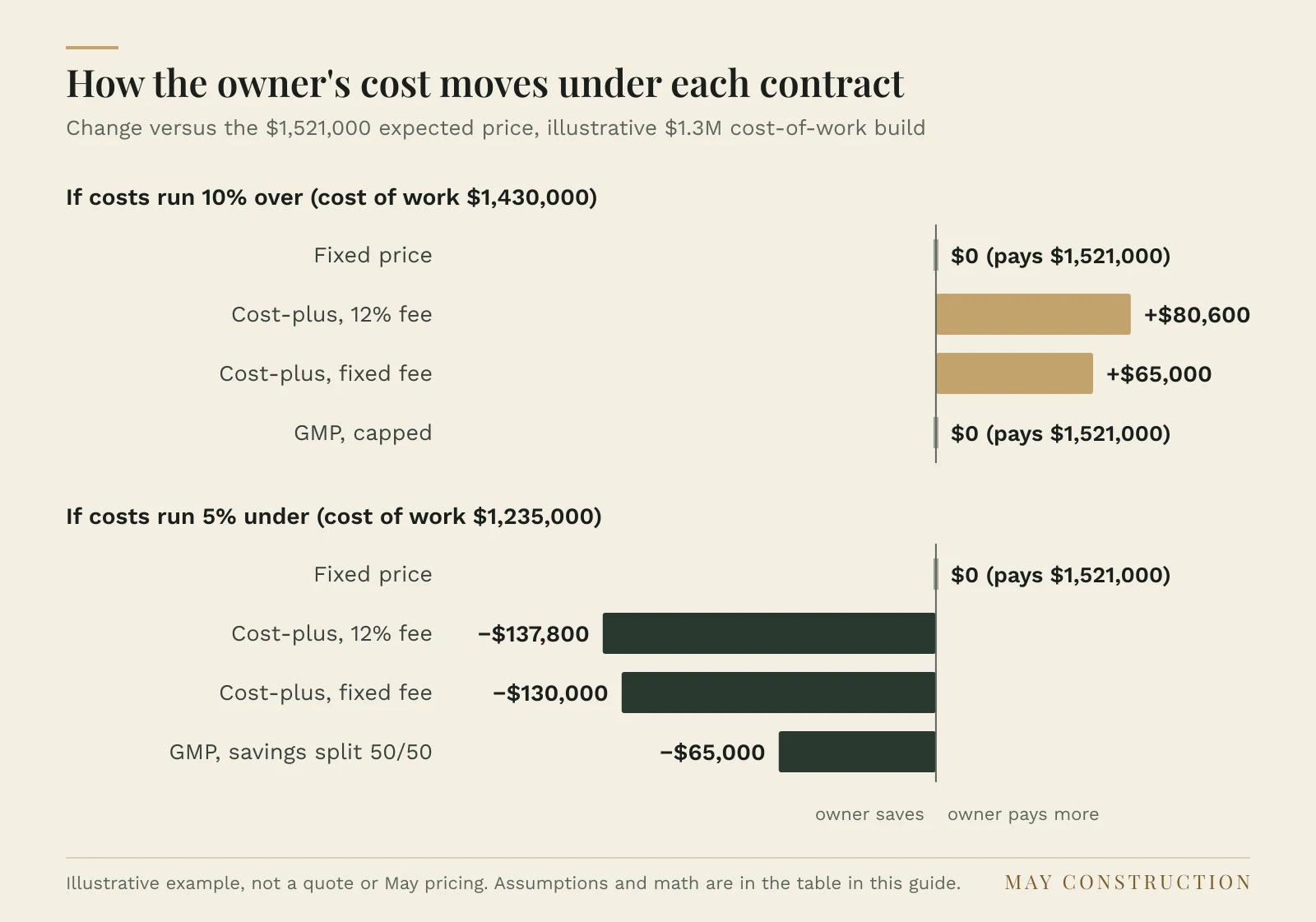
Read the chart as a trade. Fixed price never moves, which is the point of it. Cost-plus passes every dollar of the miss or the saving to you, and the percentage fee widens both swings. The GMP gives up half the upside to buy a ceiling. None of these contracts controls what you add or upgrade yourself; that arrives in every case as a change order.
Where budgets really move: allowances, contingency, and change orders
Say the contract carries a $30,000 tile allowance and the tile you choose prices at $45,000. That $15,000 comes back to you under a fixed price, a cost-plus, or a GMP alike. An allowance is a placeholder in the budget for something you haven't chosen yet, like tile, lighting, or plumbing fixtures. Both of NAHB's contract families come with a selection allowance worksheet, and the AIA GMP form has its own line for allowances included in the price. We explain why allowances are where most budget stories go wrong in our guide to what a custom home costs in Nashville.
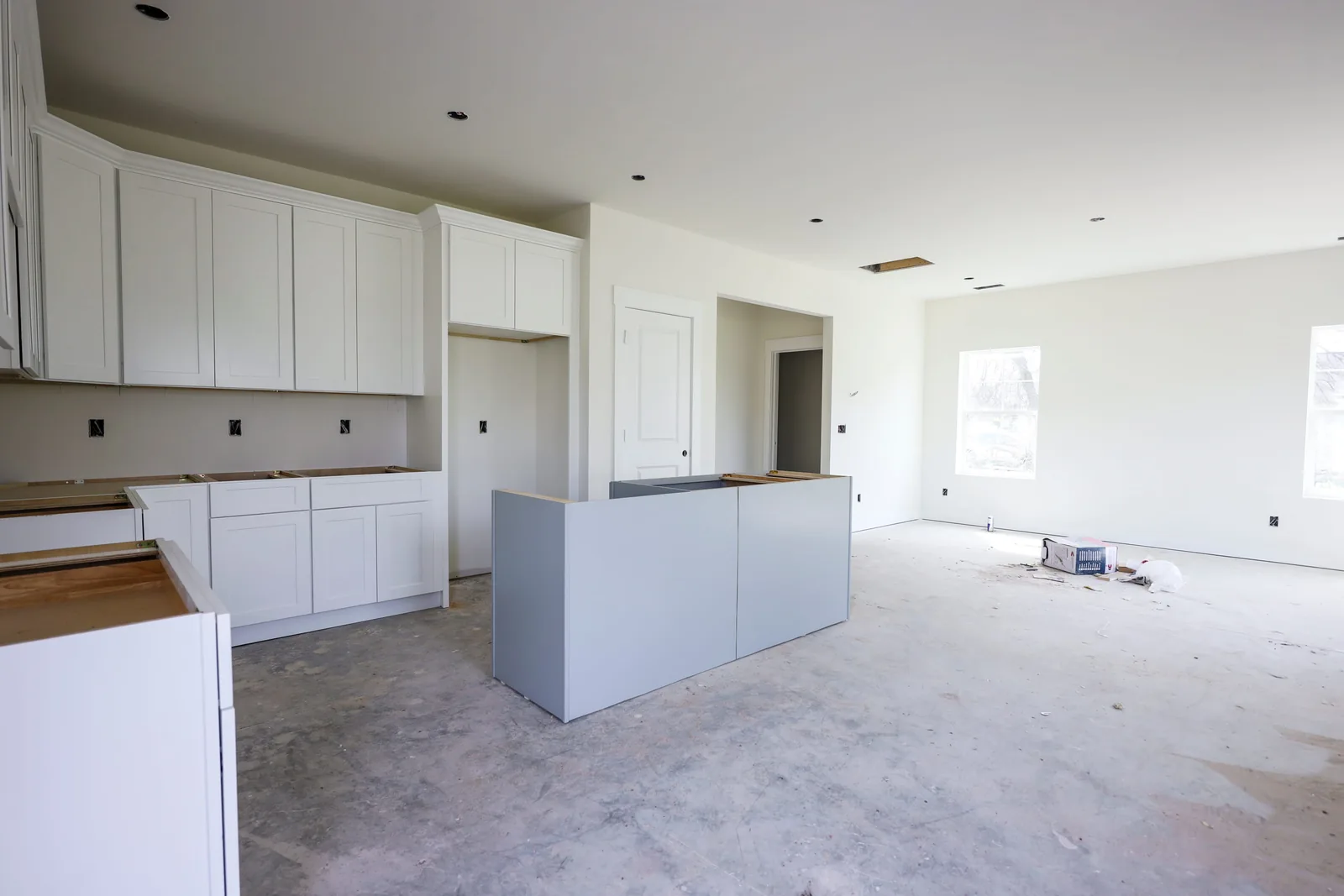
The kitchen above is from our Forest Park build, at the stage where a low countertop allowance stops being a line on a spreadsheet. At May, nothing gets bid until your selections are locked, every bid is checked against an independent takeoff, and the budget locks before the first purchase order goes out. If the design changes after that, the affected trades are re-bid and the budget is updated openly.
Contingency is different from an allowance. It is money set aside for things nobody has chosen or found yet, like rock in the excavation. Ask who controls it, what it can be spent on, and whether unspent contingency comes back to you. A change order is the written, priced record of any change in scope. Insist that each one is signed before the work is done, shows the cost and any schedule impact, and says how the fee is applied to it.
What open-book documentation should you ask for?
On a cost-plus or GMP contract, transparency is only as good as the paperwork you actually receive. AIA's cost-plus overview recommends regular reporting and documentation of costs. Ask for these with every payment request:
A draw report showing budget, costs to date, and remaining balance for each line.
Copies of subcontractor and supplier invoices behind the costs being billed.
Lien waivers from the builder and from the subcontractors and suppliers paid in the previous draw.
A change order log with the running total of approved changes.
An allowance tracker showing each allowance, what has been spent, and what is left.
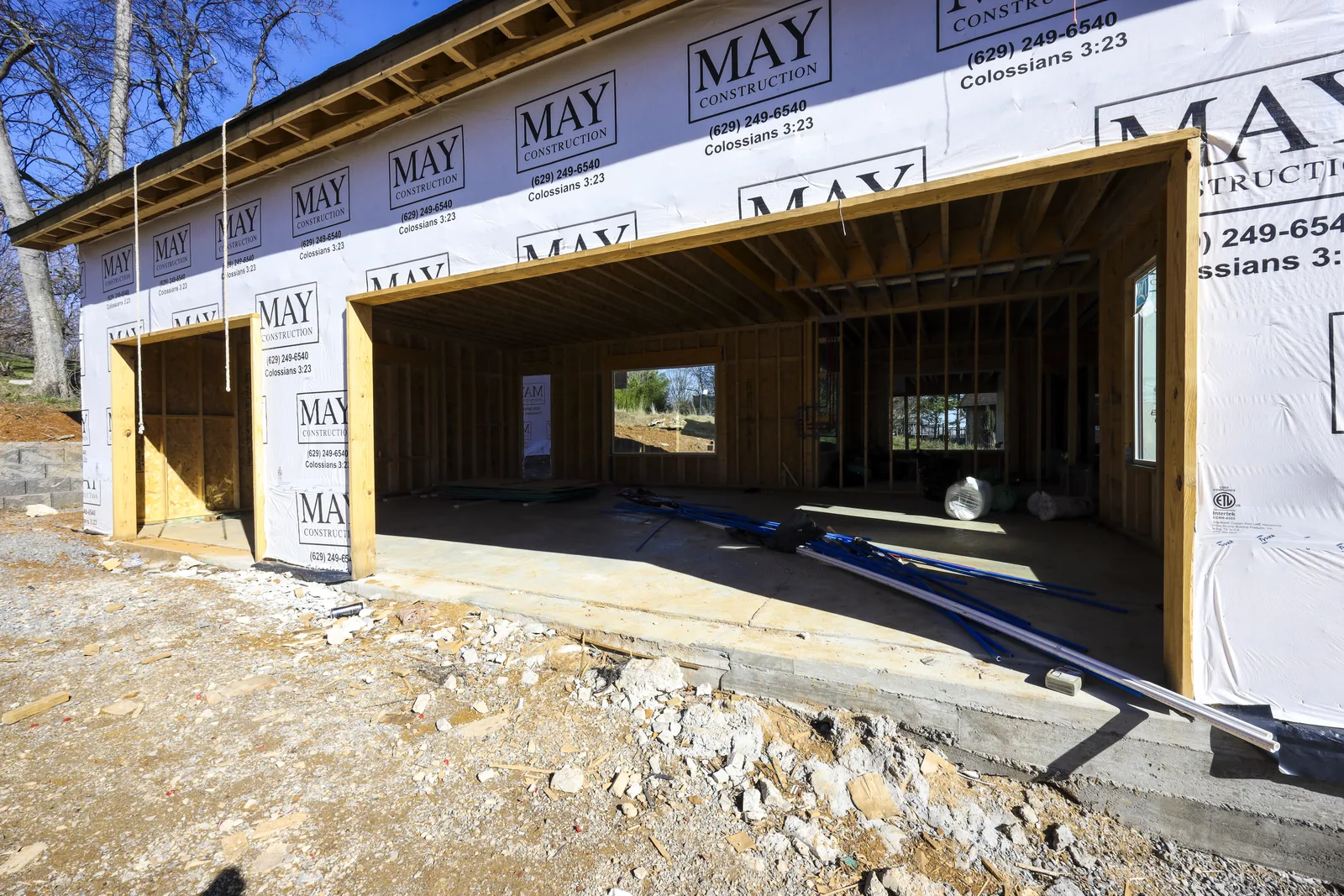
Lien waivers deserve a closer look. On a home that is or will be the owner's principal residence, Tennessee's lien law says a lien exists only in favor of a prime contractor, the builder you contract with, apart from limited exceptions. On other property, such as a second home, remote contractors (the subcontractors and suppliers below your builder) can claim liens too. Either way, your lender will want proof that everyone was paid. Waivers are how you confirm the money reached the people who did the work. If you are financing the build, your lender will have its own draw process; our guide to construction loans in Tennessee covers how draws and inspections work. On a fixed-price contract, ask for at least the draw schedule and lien waivers, even if the builder won't open its books.
What Tennessee rules apply before you sign?
Tennessee requires a contractor's license before contracting, including bidding, offering to engage, or negotiating a price on projects of $25,000 or more. A license also carries a monetary limit, which the licensing board describes as the maximum project amount authorized under the license, so check that the builder's limit covers your contract. You can look up any license through the Tennessee Board for Licensing Contractors. Our guide on how to choose a custom home builder in Nashville walks through the rest of that vetting.
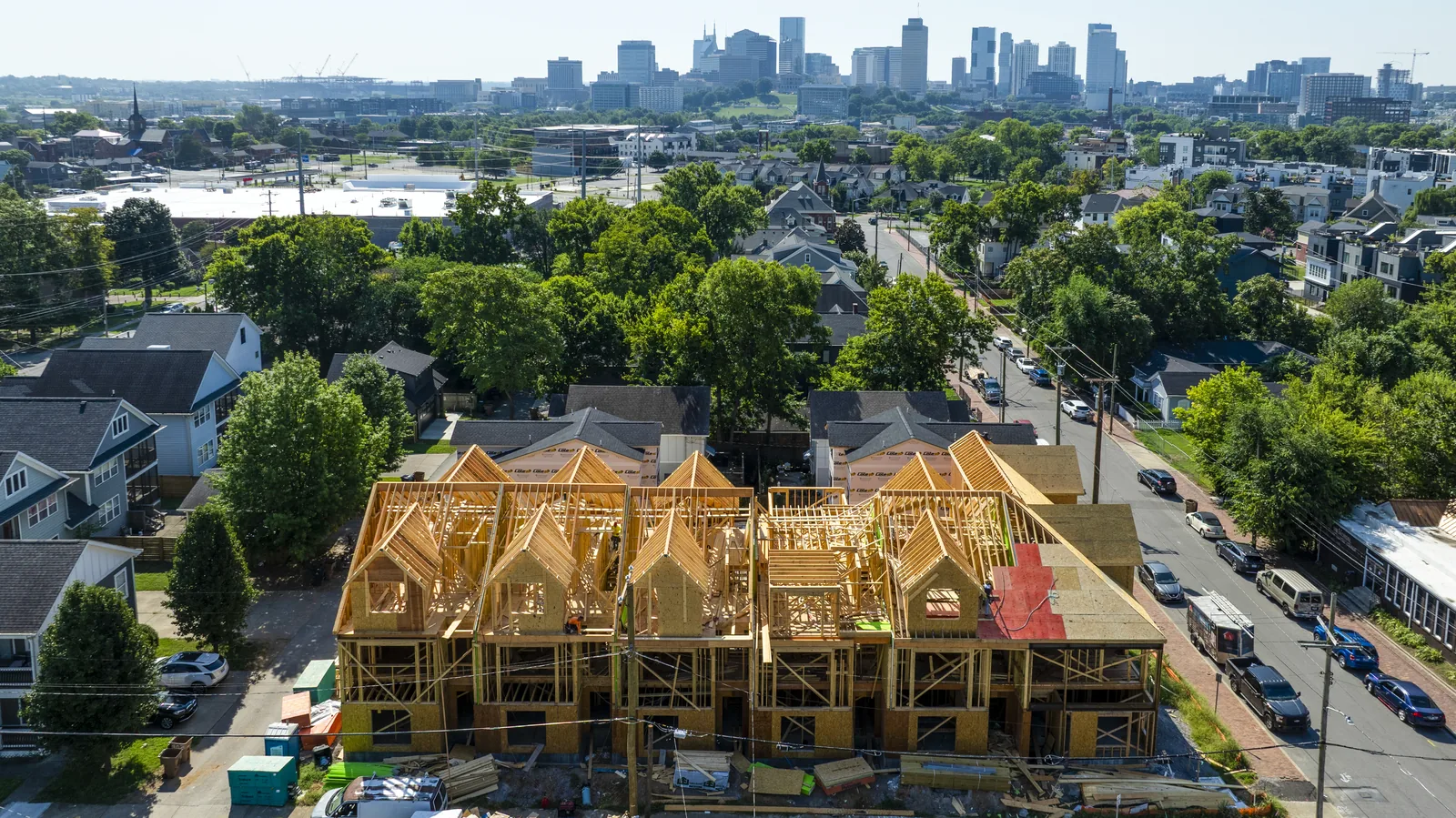
Tennessee law also requires a contractor about to improve residential property to give the owner written notice, before starting work or making the contract, that the law provides a lien upon the property for one year after the work is finished. A separate section lets the owner reject the contract by written notice sent by registered mail within three days after receiving that notice. These rules are the same whether your lot is in Davidson County or in Brentwood across the Williamson County line.
This guide is general information, not legal or financial advice. Before you sign, have a Tennessee construction attorney read the contract, and ask your lender how its draw process fits the contract type.
Which contract is better for a custom home?
None of them is better in the abstract. A fixed price fits when the drawings are finished, the selections are locked, and the site holds few unknowns, and you value a single number over seeing the costs. Cost-plus with a fixed fee fits when you want full visibility and you have the time and temperament to read draw reports. A percentage fee is the hardest to defend on new construction because it pays the builder more when costs rise. A GMP fits an owner who wants open books and a ceiling, once the design is far enough along that the cap means something.
The better question for any builder is how they get to a reliable number before construction starts, and how they handle changes after. Ask the builders you are interviewing which contract they use and why, and ask to see a sample draw report. If you are talking with us, bring that question to your first conversation; you can see how bids, budget, and build fit together in May's seven-step build process.
What contract clauses should you read before signing?
Before you sign, find each of these in the contract:
The contract type in plain words, and the full contract price, cap, or fee.
What counts as reimbursable cost, and what the fee is supposed to cover, such as office staff, supervision, and overhead.
How the fee adjusts when scope changes, and whether a fee applies to allowance overages.
The allowance schedule, item by item, with amounts you have checked against real selections.
Who controls contingency, what it can pay for, and where unspent contingency goes.
The GMP savings clause, if there is one.
The change order process: written, priced, and signed before the work, with schedule impact stated.
The draw schedule and the documents attached to each draw, including invoices and lien waivers.
Your audit rights: which records you can see, and for how long after completion.
How unforeseen site conditions and material price increases are handled, plus the builder's license number, classification, and insurance.
Questions, answered
- What are the disadvantages of a cost-plus contract?
- Without a cap, you carry the risk of overruns, and you won't know the final price until the house is done. With a percentage fee, the builder earns more as costs rise, which weakens the incentive to hold them down. Cost-plus also asks more of you: reviewing draw reports, invoices, and lien waivers each month.
- Who pays for mistakes in a cost-plus contract?
- It depends on how the contract defines reimbursable cost. The AIA cost-plus form limits the cost of the work to costs necessarily incurred in the proper performance of the work, but your contract should say plainly who pays to redo defective work. Get that answer in writing before you sign, not after a wall has to come down.
- What is a typical cost-plus percentage?
- There is no official standard rate; the fee is negotiated and varies with the builder, the project size, and what the fee covers. Compare fees only after you know which costs each builder bills directly and which are folded into the fee. A lower percentage that excludes supervision and office costs can cost more than a higher one that includes them.
- Is a fixed-price contract safer for a custom home?
- It is more predictable, as long as the drawings and selections are complete when you sign. The price still moves with change orders, allowance overages, and any clauses for unforeseen conditions or material price increases. You also pay for the builder's risk cushion even when nothing goes wrong.
- Cost-plus fixed fee vs. percentage: which should you ask for?
- On new construction with a finished design, a fixed fee is usually easier to live with, because the builder's pay doesn't grow when the house gets more expensive. A percentage can make sense when scope is too uncertain for anyone to set a fair fixed number, such as a renovation with hidden conditions. Either way, get the method for adjusting the fee on added scope written into the contract.
- Can a builder raise the price on a GMP contract?
- The cap moves only through approved change orders or other adjustments the contract allows. If costs exceed the cap for reasons outside those, the standard AIA form puts the overage on the contractor. Read what your contract counts as a change, because that list defines how firm the ceiling really is.